


Queen Elizabeth National Park Uganda: The Complete Safari Guide
Few destinations showcase Uganda’s incredible biodiversity better than Queen Elizabeth National Park Uganda. Stretching across the western part of the country beneath the majestic Rwenzori Mountains, this remarkable protected area combines classic African savannah, volcanic crater lakes, lush forests, wetlands, and one of Africa’s richest concentrations of wildlife into a single unforgettable safari destination.
Whether you dream of photographing elephants against golden sunsets, watching hippos in the famous Kazinga Channel, searching for the legendary tree-climbing lions of Ishasha, or tracking chimpanzees through tropical forests, Queen Elizabeth National Park Uganda delivers experiences that rival the finest wildlife destinations on the continent.
For many visitors planning a Uganda safari, Queen Elizabeth National Park becomes the highlight of their journey because of its diversity. Unlike parks that focus on only one wildlife experience, Queen Elizabeth offers exceptional game drives, boat safaris, birdwatching, chimpanzee tracking, scenic crater lakes, cultural encounters, and spectacular landscapes all within one protected ecosystem.
At Hillary Uganda Trips, every safari is personally guided by Hillary, a local wildlife photographer and experienced safari guide who has spent years exploring Uganda’s national parks. His firsthand knowledge of animal behavior, seasonal movements, lighting conditions, and photography techniques helps guests enjoy richer wildlife encounters while capturing extraordinary safari photographs that tell authentic African stories.
If you are planning your first Uganda wildlife safari or returning to discover more of East Africa’s hidden treasures, this comprehensive guide explains everything you need to know before visiting Queen Elizabeth National Park.
Where is Queen Elizabeth National Park?
Situated in western Uganda, Queen Elizabeth National Park Uganda lies approximately 400 kilometers southwest of Kampala and borders the famous Bwindi Impenetrable National Park, Kibale National Park, and the Democratic Republic of Congo.
Its strategic location makes it one of the easiest parks to combine with other major safari destinations. Most visitors include Queen Elizabeth National Park in longer itineraries featuring gorilla trekking in Bwindi, chimpanzee tracking in Kibale Forest, or relaxation at Lake Bunyonyi.
The park covers nearly 2,000 square kilometers and forms part of the greater Albertine Rift Valley, one of Africa’s most important biodiversity hotspots.
The landscape continually changes as you travel through the park. Open grasslands suddenly transition into acacia woodlands, volcanic crater lakes overlook rolling hills, wetlands attract thousands of birds, and tropical forests shelter primates. This extraordinary diversity explains why every game drive feels completely different from the previous one.
Why Queen Elizabeth National Park is One of Uganda’s Best Safari Destinations
Among all the national parks in Uganda, Queen Elizabeth stands out because of its incredible variety of experiences.
Instead of focusing solely on wildlife viewing, visitors enjoy an ever-changing combination of ecosystems that support more than 95 mammal species and over 600 bird species. Very few protected areas in Africa offer such diversity within a relatively compact area.
Every safari day brings new discoveries. Morning game drives reveal predators returning from their nighttime hunts, while afternoons often feature elephants gathering near waterholes. Evenings provide spectacular sunsets over the savannah before nocturnal wildlife begins to emerge.
Unlike some safari destinations where wildlife can become difficult to locate during certain seasons, Queen Elizabeth National Park maintains impressive wildlife viewing throughout the year due to its varied habitats.
The combination of scenery, accessibility, excellent accommodation, experienced local guides, and multiple safari activities makes this park suitable for photographers, families, honeymooners, birdwatchers, and first-time safari travellers alike.
The Fascinating History of Queen Elizabeth National Park
Originally established in 1952 as Kazinga National Park, the protected area was later renamed Queen Elizabeth National Park following the historic visit of Queen Elizabeth II to Uganda in 1954.
Over the decades, conservation efforts have transformed the park into one of East Africa’s greatest wildlife sanctuaries despite numerous challenges, including periods of poaching during political instability.
Today, wildlife populations continue recovering under the management of the Uganda Wildlife Authority alongside community conservation initiatives that benefit local people while protecting biodiversity.
Modern visitors now enjoy healthy populations of elephants, buffaloes, lions, leopards, antelopes, crocodiles, hippos, and countless bird species thriving across the park’s diverse ecosystems.
Wildlife in Queen Elizabeth National Park Uganda
One of the biggest reasons travellers choose Queen Elizabeth National Park Uganda is its remarkable wildlife diversity.
Every habitat supports different animal species, making game drives both exciting and unpredictable. Rather than seeing the same animals repeatedly, visitors constantly encounter new species as they explore different sectors of the park.
Among the mammals commonly seen are African elephants peacefully feeding through acacia woodlands, Cape buffalo grazing across open plains, Uganda kob moving in graceful herds, Defassa waterbuck browsing near wetlands, giant forest hogs crossing tracks unexpectedly, warthogs kneeling as they feed, and elusive hyenas beginning their evening patrols.
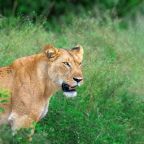
Predators are equally impressive. Lions patrol the Kasenyi Plains while the famous tree-climbing lions inhabit the Ishasha Sector. Leopards remain secretive but are regularly photographed during early morning or late evening game drives by experienced guides who understand their preferred habitats.
The Kazinga Channel supports one of Africa’s highest concentrations of hippos alongside enormous Nile crocodiles resting along muddy riverbanks.
For primate enthusiasts, nearby forests shelter chimpanzees, black-and-white colobus monkeys, vervet monkeys, red-tailed monkeys, olive baboons, and several other fascinating primate species.
The Famous Tree-Climbing Lions of Ishasha
Perhaps no wildlife experience attracts visitors more than the extraordinary tree-climbing lions found in the Ishasha Sector of Queen Elizabeth National Park.
Unlike most lions across Africa that spend their days resting on the ground, Ishasha’s lions regularly climb enormous fig trees where they relax above the heat, avoid biting insects, and monitor potential prey across the surrounding plains.
Watching an adult male lion balancing effortlessly along a thick tree branch while cubs sleep overhead is an unforgettable safari experience that very few places in the world can offer.
Finding these remarkable cats requires patience, local knowledge, and an experienced guide who understands their daily movements.
Hillary has spent years photographing Ishasha’s famous lions under different weather conditions and seasons. His understanding of light, animal behavior, and positioning greatly increases guests’ opportunities to capture stunning wildlife photographs while maintaining respectful distances from the animals.
For photographers, early morning and late afternoon provide the most beautiful lighting as warm golden sunlight illuminates the lions resting among green leaves.
The Beautiful Landscapes of Queen Elizabeth National Park
While wildlife receives much of the attention, the park’s landscapes deserve equal admiration.
The breathtaking scenery continually surprises visitors with panoramic views stretching from volcanic crater lakes to distant mountain ranges.
The snow-capped peaks of the Rwenzori Mountains create dramatic backdrops for wildlife photography, especially during clear mornings when sunlight highlights their rugged summits.
Elsewhere, rolling savannahs extend endlessly across the Kasenyi Plains while volcanic craters filled with shimmering lakes reveal the geological history of the Albertine Rift Valley.
Acacia woodlands create ideal habitats for giraffe-like silhouettes of Uganda kob and elephants moving gracefully between scattered trees.
The Kazinga Channel adds another spectacular dimension to the landscape, connecting Lake George and Lake Edward while supporting one of Africa’s richest aquatic ecosystems.
Every corner of the park presents fresh photographic opportunities, making Queen Elizabeth National Park one of Uganda’s most visually rewarding safari destinations.
Best Time to Visit Queen Elizabeth National Park Uganda
One of the advantages of visiting Queen Elizabeth National Park Uganda is that wildlife viewing remains rewarding throughout the year.
The dry seasons, typically from June to September and December to February, offer excellent game viewing because vegetation becomes shorter and animals gather around permanent water sources. Roads also remain easier to navigate during these months, making safari activities more comfortable.
The wetter seasons transform the landscape into lush green scenery filled with wildflowers and dramatic skies that photographers particularly appreciate. Birdwatchers also enjoy exceptional sightings during these months as migratory species arrive from Europe and Asia.
Hillary often recommends selecting travel dates based on individual interests rather than assuming one season is universally better. Wildlife photography, birding, chimpanzee tracking, and landscape photography each benefit from slightly different seasonal conditions.
With professional planning and flexible safari schedules, outstanding wildlife encounters can be enjoyed throughout the year.
Wildlife Photography in Queen Elizabeth National Park
For photographers, few destinations in East Africa offer as many creative opportunities as Queen Elizabeth National Park.
The constantly changing landscapes, dramatic lighting, abundant wildlife, and diverse ecosystems allow photographers to build varied portfolios during a single safari.
One of Hillary’s greatest strengths as both a guide and wildlife photographer is helping guests improve their photography regardless of their experience level or camera equipment.
Instead of simply locating animals, he explains how changing your shooting angle, anticipating animal behavior, understanding natural light, and composing scenes can transform ordinary wildlife images into memorable storytelling photographs.
Guests also receive practical guidance on camera settings, shutter speed, autofocus techniques, exposure compensation, and positioning the safari vehicle for the best lighting without disturbing wildlife.
Whether using a professional DSLR, mirrorless camera, bridge camera, or even a modern smartphone, travelers consistently return home with stronger wildlife photographs thanks to Hillary’s practical field instruction and firsthand local knowledge.
Game Drives in Queen Elizabeth National Park Uganda
A game drive in Queen Elizabeth National Park Uganda is one of the most rewarding wildlife experiences in East Africa. The park’s extensive network of well-maintained tracks passes through open savannah, acacia woodland, wetlands, and crater landscapes, offering excellent opportunities to encounter wildlife throughout the day.
Unlike many African parks where wildlife viewing is concentrated in only one area, Queen Elizabeth National Park provides several distinct game viewing circuits, each with its own unique habitats and resident species. This variety ensures that no two game drives are ever the same.
Early morning game drives begin before sunrise when temperatures are cool and wildlife is at its most active. Lions finish their nightly hunts, elephants emerge from woodland areas, buffalo gather on open plains, while antelope species begin grazing in the golden morning light. For photographers, these first hours of daylight often provide the softest light and the most dramatic wildlife moments.
Afternoon game drives reveal a different side of the park. As the heat gradually decreases, elephants return toward water sources, warthogs forage confidently across the plains, and predators become increasingly active before sunset.
During every safari with Hillary Uganda Trips, Hillary carefully adjusts each game drive according to weather conditions, wildlife activity, recent sightings, and the interests of his guests. Rather than rushing from one animal to another, he allows time to observe natural behaviours, helping visitors appreciate each encounter while creating outstanding photography opportunities.
The Kasenyi Plains – The Wildlife Heart of Queen Elizabeth National Park
Among all safari areas, the Kasenyi Plains remain one of the most productive wildlife viewing locations within Queen Elizabeth National Park Uganda.
The expansive grasslands support enormous herds of Uganda kob, one of the park’s signature antelope species. These large concentrations of prey naturally attract predators, making Kasenyi one of the best places in Uganda to observe lions in their natural environment.
Watching a pride of lions quietly stalking kob across the plains is one of the defining safari experiences of Queen Elizabeth National Park. Sometimes visitors witness dramatic hunting behaviour, while at other times the lions simply rest beneath scattered acacia trees after successful hunts.
Besides lions, Kasenyi offers regular sightings of elephants, buffaloes, waterbucks, bushbucks, warthogs, hyenas, and occasionally leopards hidden within taller vegetation.
Because the plains remain relatively open, photographers enjoy clear lines of sight that make it easier to capture wildlife against beautiful natural backgrounds.
Hillary’s experience photographing wildlife in Kasenyi allows guests to position themselves for the best light while maintaining ethical wildlife viewing practices that never interfere with animal behaviour.
The Famous Kazinga Channel Boat Cruise
No visit to Queen Elizabeth National Park Uganda is complete without experiencing the unforgettable Kazinga Channel boat cruise.
The Kazinga Channel is a natural waterway approximately 40 kilometres long, connecting Lake Edward and Lake George. Although relatively narrow, it supports one of Africa’s highest concentrations of aquatic wildlife.
As the boat slowly cruises along the shoreline, visitors quickly understand why this activity ranks among the highlights of every Uganda safari.
Large pods of hippos fill the water, often numbering in the hundreds. Nile crocodiles bask motionless along muddy banks while African elephants cautiously descend to drink. Cape buffalo gather in impressive numbers beside the shoreline, creating spectacular wildlife scenes rarely witnessed elsewhere.
Waterbirds are everywhere. African fish eagles perch overhead, pied kingfishers hover above the water before diving for fish, saddle-billed storks patrol shallow areas, while colourful bee-eaters and herons occupy the surrounding vegetation.
Unlike a traditional game drive, the boat cruise offers eye-level perspectives that allow photographers to capture intimate wildlife portraits with beautiful reflections across calm waters.
The peaceful pace of the cruise also provides opportunities to observe animal interactions often missed during faster vehicle safaris.
For bird photographers especially, the Kazinga Channel offers some of the finest photographic opportunities anywhere in Uganda.
Wildlife Photography Along the Kazinga Channel
As a professional wildlife photographer, Hillary often describes the Kazinga Channel as one of Uganda’s finest outdoor photography studios.
The changing reflections, golden evening light, dramatic skies, and close wildlife encounters create ideal conditions for both beginner and experienced photographers.
Rather than simply photographing individual animals, Hillary encourages guests to tell complete visual stories by including habitat, behaviour, lighting, and interactions within each composition.
Some of the most memorable images often come from unexpected moments—an elephant spraying water across its back, a fish eagle taking flight, a crocodile silently entering the river, or hippos communicating through dramatic displays.
Guests also receive practical advice on photographing moving boats, maintaining stable camera settings, choosing appropriate focal lengths, and anticipating wildlife behaviour before it unfolds.
These field-based lessons help visitors improve not only during their Uganda safari but throughout their future wildlife photography journeys.
Exploring the Mweya Peninsula
The Mweya Peninsula occupies one of the most scenic locations within Queen Elizabeth National Park Uganda.
Surrounded by the Kazinga Channel, Lake Edward, and sweeping savannah landscapes, Mweya serves as the tourism hub of the park while offering exceptional wildlife viewing in its own right.
Morning drives around Mweya frequently reveal elephants feeding among euphorbia trees, buffalo grazing near wetlands, and large troops of olive baboons moving confidently along roadside vegetation.
Several scenic viewpoints overlook the Kazinga Channel, providing panoramic vistas that are particularly beautiful during sunrise and sunset.
Because of its strategic location, many visitors choose to stay within the Mweya area, allowing easy access to game drives, boat cruises, birdwatching excursions, and photography opportunities.
Chimpanzee Tracking in Kyambura Gorge
Although Queen Elizabeth National Park is famous for savannah wildlife, it also offers one of Uganda’s most unique primate experiences inside Kyambura Gorge.
Often called the “Valley of Apes,” Kyambura Gorge cuts dramatically through the surrounding savannah, creating a lush tropical forest hidden hundreds of metres below the grasslands.
Descending into the gorge feels like entering an entirely different ecosystem.
Towering trees replace open plains, dense vegetation shelters numerous primate species, and birdsong echoes through the forest canopy.
The main attraction is the habituated community of wild chimpanzees.
Tracking these intelligent primates through their natural habitat provides a fascinating contrast to traditional game drives.
Although chimpanzee sightings depend on their daily movements, experienced rangers interpret vocalisations, feeding signs, and nesting locations to maximise the chances of successful encounters.
Besides chimpanzees, visitors frequently encounter black-and-white colobus monkeys, red-tailed monkeys, vervet monkeys, colourful butterflies, reptiles, and numerous forest birds.
Combining chimpanzee tracking with classic wildlife safaris makes Queen Elizabeth National Park one of Uganda’s most complete safari destinations.
The Volcanic Crater Lakes
Scattered across the northern section of Queen Elizabeth National Park lies an extraordinary chain of volcanic crater lakes formed thousands of years ago.
These beautiful lakes occupy ancient volcanic craters created during the geological formation of the Albertine Rift Valley.
Today they provide breathtaking scenery that contrasts beautifully with the surrounding savannah.
Many crater lakes are surrounded by lush vegetation, while elevated viewpoints offer sweeping panoramas across multiple lakes, rolling hills, distant forests, and the snow-capped Rwenzori Mountains on clear days.
Photographers particularly appreciate these locations during sunrise and sunset when warm light transforms the landscape into vibrant shades of gold, orange, and green.
Several scenic drives through the crater region also pass traditional communities where visitors gain insight into local farming practices and rural life in western Uganda.
Why Travel with Hillary Uganda Trips?
A safari becomes far more rewarding when guided by someone who knows the landscape beyond guidebooks.
With Hillary Uganda Trips, every journey is led by Hillary, a local wildlife photographer, experienced safari guide, and passionate conservation ambassador who has spent years exploring Uganda’s national parks.
His firsthand understanding of wildlife behaviour, seasonal movements, photography, birdlife, and local culture enables guests to enjoy richer experiences than simply following standard safari routes.
Instead of rushing through sightings, Hillary helps travellers understand animal behaviour, interpret wildlife interactions, recognise bird species, improve photography techniques, and appreciate the ecological importance of Uganda’s protected areas.
Whether you are a first-time safari traveller, a dedicated wildlife photographer, a birder, or returning to Uganda for another adventure, Hillary ensures every safari is tailored to your interests and travel style.
Plan Your Queen Elizabeth National Park Safari with Hillary
If you are dreaming of seeing tree-climbing lions, cruising along the Kazinga Channel, photographing elephants in golden light, or combining Queen Elizabeth National Park with gorilla trekking in Bwindi Impenetrable National Park, Hillary Uganda Trips can design a safari that matches your interests, budget, and schedule.
As a local guide and wildlife photographer, Hillary provides firsthand advice before your trip and personally leads many safaris, ensuring you experience Uganda beyond the ordinary tourist routes. His photography guidance throughout the safari also helps guests return home with exceptional wildlife images and unforgettable memories.
Contact Me Today
Ready to plan your Uganda safari?
📱 WhatsApp: +256726436969
📧 Email: hillary@hillaryugandatrips.com
Whether you are planning a luxury safari, a photography expedition, a birding holiday, or a classic wildlife adventure, Hillary Uganda Trips is ready to help you experience the very best of Queen Elizabeth National Park Uganda and beyond.
Birdwatching in Queen Elizabeth National Park Uganda
Beyond its famous mammals, Queen Elizabeth National Park Uganda is internationally recognised as one of Africa’s finest birding destinations. With more than 620 recorded bird species, the park boasts one of the highest bird counts of any protected area on the continent, making it a dream destination for both dedicated birders and casual nature lovers.
The park’s remarkable diversity of habitats including open savannah, papyrus swamps, freshwater lakes, tropical forests, crater lakes, wetlands, and riverine vegetation that supports an astonishing variety of resident and migratory birds throughout the year.
Whether you are carrying professional telephoto lenses or simply enjoying birds through binoculars, every safari drive, boat cruise, or nature walk presents exciting opportunities to observe colourful and often rare species.
One of the most sought-after birds is the majestic African fish eagle, whose unmistakable call echoes across the Kazinga Channel. Other commonly seen species include saddle-billed storks, grey crowned cranes (Uganda’s national bird), martial eagles, secretary birds, African skimmers, pied kingfishers, malachite kingfishers, African jacanas, little bee-eaters, black-headed gonoleks, and numerous species of herons, hornbills, weavers, sunbirds, and vultures.
Seasonal migratory birds arriving from Europe and northern Africa further increase the park’s incredible bird diversity during the wetter months.
For visitors interested in Uganda birding safaris, Queen Elizabeth National Park offers outstanding opportunities regardless of experience level.
Bird Photography Tips from Hillary
Bird photography often requires patience, technical skill, and an understanding of bird behaviour. Fortunately, this is where travelling with an experienced wildlife photographer makes a significant difference.
As a professional wildlife photographer, Hillary helps guests recognise ideal lighting conditions, anticipate bird movements, and select suitable camera settings before the action happens.
Instead of simply chasing birds, Hillary teaches visitors to observe behaviour. Understanding when a kingfisher is preparing to dive or when an African fish eagle is about to launch from its perch greatly improves the chances of capturing dynamic images.
Guests also receive practical advice on shutter speed, autofocus settings, exposure adjustments, composition, and ethical wildlife photography that avoids disturbing birds in their natural habitats.
Even visitors using compact cameras or smartphones often leave with dramatically improved wildlife photographs after applying Hillary’s simple yet highly effective techniques in the field.
The Maramagambo Forest Experience
Located within the southern section of Queen Elizabeth National Park Uganda, Maramagambo Forest introduces visitors to an entirely different ecosystem.
This extensive tropical forest contrasts sharply with the surrounding savannah, offering cool walking trails beneath towering trees draped with vines and dense vegetation.
Maramagambo is home to numerous primates, including vervet monkeys, black-and-white colobus monkeys, L’Hoest’s monkeys, olive baboons, and occasional chimpanzees moving through the forest canopy.
Birdlife is equally impressive, with many forest specialists that cannot easily be found in the open grasslands.
One of the forest’s most fascinating attractions is the famous bat cave, where thousands of fruit bats occupy the dark interior. Visitors observe the cave safely from designated viewing areas while learning about its ecological importance.
Nature walks through Maramagambo provide a peaceful alternative to vehicle safaris, allowing visitors to appreciate the smaller details of Uganda’s extraordinary biodiversity.
Cultural Experiences Around Queen Elizabeth National Park
A safari in western Uganda becomes even more rewarding when visitors take time to experience the rich cultures of the local communities surrounding the park.
For generations, these communities have lived alongside wildlife while developing traditions closely connected to the natural environment.
Cultural visits provide opportunities to learn about traditional farming, cattle keeping, local crafts, music, dance, storytelling, and everyday village life.
Guests gain valuable insight into how conservation and tourism support local livelihoods through employment, handicraft production, community projects, and cultural tourism initiatives.
Many visitors find these experiences among the most memorable parts of their Uganda safari because they create genuine connections with local people while contributing directly to community development.
Hillary enjoys introducing guests to authentic cultural experiences that complement wildlife safaris without feeling commercialised or rushed.
Accommodation in Queen Elizabeth National Park Uganda
One of the greatest advantages of visiting Queen Elizabeth National Park Uganda is the excellent range of accommodation available for every type of traveller.
Whether you are planning a luxury honeymoon, a family holiday, a photography expedition, or a budget-friendly safari, the park offers comfortable options in spectacular locations.
Luxury lodges provide elegant suites overlooking the Kazinga Channel or surrounding savannah, often featuring swimming pools, fine dining, spa facilities, and panoramic viewing decks where wildlife regularly visits nearby.
Mid-range safari lodges combine excellent comfort with outstanding value. Many feature spacious cottages, beautiful gardens, attentive service, and easy access to the park’s main safari activities.
Budget lodges and safari camps offer clean, comfortable accommodation for travellers seeking memorable wildlife experiences while keeping costs manageable.
When designing your safari, Hillary Uganda Trips carefully recommends accommodation based on your travel style, photography interests, preferred activities, and overall itinerary rather than simply choosing the most expensive option.
Combining Queen Elizabeth National Park with Other Uganda Safari Destinations
One reason Queen Elizabeth National Park Uganda is so popular is its excellent location within Uganda’s famous western safari circuit.
Many travellers combine several destinations into one unforgettable adventure, creating a safari that showcases the country’s remarkable diversity.
After enjoying classic wildlife safaris in Queen Elizabeth National Park, many visitors continue south to Bwindi Impenetrable National Park for the once-in-a-lifetime experience of mountain gorilla trekking.
Others travel north to Kibale National Park, renowned as the primate capital of East Africa and one of the best places in the world to track wild chimpanzees.
A relaxing stay at Lake Bunyonyi, often described as Uganda’s most beautiful lake, provides the perfect conclusion to an active safari, while Lake Mburo National Park offers walking safaris, horseback safaris, and close encounters with zebras and giraffes.
By combining these destinations, visitors experience Uganda’s extraordinary variety of wildlife, landscapes, cultures, and ecosystems within a single journey.
Sample Queen Elizabeth National Park Safari Itinerary
Although every safari can be customised, many visitors spend two or three nights exploring Queen Elizabeth National Park as part of a longer Uganda itinerary.
On the first day, travellers typically arrive from Kampala, Kibale National Park, or Bwindi and enjoy an evening game drive through the Kasenyi Plains or Mweya Peninsula before watching the sunset across the savannah.
The second day often begins with an early morning game drive in search of lions, elephants, buffaloes, leopards, hyenas, and numerous antelope species. After lunch, visitors experience the unforgettable Kazinga Channel boat cruise, where hippos, crocodiles, elephants, buffalo, and abundant birdlife gather along the shoreline.
Those spending a third day frequently visit the Ishasha Sector to search for the famous tree-climbing lions or explore Kyambura Gorge for chimpanzee tracking before continuing to their next destination.
Hillary carefully adjusts each itinerary according to wildlife movements, weather conditions, photography opportunities, and guests’ personal interests to maximise every safari experience.
Conservation in Queen Elizabeth National Park
The future of Queen Elizabeth National Park Uganda depends on successful conservation efforts that protect wildlife while supporting neighbouring communities.
The park is managed by the Uganda Wildlife Authority in partnership with conservation organisations, researchers, tourism operators, and local residents.
Revenue generated through responsible tourism contributes directly to wildlife protection, ranger patrols, scientific research, infrastructure development, environmental education, and community conservation programmes.
Visitors also play an important role by following park regulations, respecting wildlife, avoiding litter, supporting ethical tourism businesses, and choosing local guides who promote sustainable safari practices.
Hillary strongly believes that every safari should contribute positively to conservation while creating unforgettable experiences for travellers. By travelling responsibly, guests help ensure that future generations can continue enjoying Uganda’s remarkable wildlife heritage.
Why Queen Elizabeth National Park is a Paradise for Wildlife Photography
Few places in Africa provide photographers with such an incredible combination of subjects within a relatively compact area.
In a single day, photographers may capture lions resting beneath acacia trees, elephants crossing open plains, fish eagles diving for prey, hippos emerging from mist-covered water, colourful kingfishers perched along the Kazinga Channel, and breathtaking landscapes framed by the distant Rwenzori Mountains.
The park’s constantly changing scenery encourages photographers to think creatively rather than focusing only on close-up wildlife portraits.
Hillary encourages guests to photograph complete safari stories by combining landscapes, wildlife behaviour, environmental portraits, dramatic lighting, and local culture into a diverse photographic portfolio.
His hands-on guidance helps travellers improve composition, understand natural light, anticipate animal behaviour, and build confidence behind the camera regardless of experience or equipment.
By the end of the safari, many guests discover they have not only enjoyed an incredible wildlife adventure but have also developed lasting photography skills they can use on future journeys around the world.
How to Get to Queen Elizabeth National Park Uganda
Reaching Queen Elizabeth National Park Uganda is straightforward, making it one of the country’s most accessible safari destinations. Most visitors travel by road from Kampala or Entebbe, a scenic journey of approximately six to eight hours through central Uganda’s countryside, tea plantations, and the rolling hills of western Uganda. Many travelers combine the drive with a stop at the Equator or continue from nearby destinations such as Kibale National Park or Bwindi Impenetrable National Park.
For those with limited time, domestic scheduled and charter flights operate between Entebbe International Airport and nearby airstrips, significantly reducing travel time. Flying is an excellent option for luxury safaris or visitors combining multiple destinations across Uganda.
What to Pack for Your Safari
Packing appropriately will make your visit more comfortable and enjoyable. Neutral-colored clothing such as khaki, olive, or beige is recommended for game drives, while lightweight, breathable fabrics are ideal for Uganda’s warm daytime temperatures. Evenings can be cooler, especially after rain, so a light fleece or jacket is useful.
Comfortable walking shoes, sunglasses, sunscreen, insect repellent, a wide-brimmed hat, reusable water bottle, binoculars, and a good camera with extra batteries and memory cards are highly recommended. If you are planning wildlife photography, a telephoto lens of at least 300 mm will help capture distant animals, although Hillary also helps guests maximize results with shorter lenses and even smartphone cameras.
Responsible Safari Travel
Queen Elizabeth National Park is one of Uganda’s greatest conservation success stories, and every visitor plays a role in protecting it. Always follow your guide’s instructions, remain inside designated safari vehicles unless instructed otherwise, avoid feeding wildlife, dispose of waste responsibly, and maintain a respectful distance from animals.
Responsible tourism also means supporting local communities by purchasing locally made crafts, using experienced Ugandan guides, and choosing operators committed to sustainable tourism. Every safari booked through Hillary Uganda Trips contributes to responsible travel while supporting local expertise and conservation.
Frequently Asked Questions About Queen Elizabeth National Park Uganda
Is Queen Elizabeth National Park worth visiting?
Absolutely. It is one of Uganda’s most diverse safari destinations, offering game drives, boat cruises, chimpanzee tracking, birdwatching, crater lakes, and the famous tree-climbing lions within one park.
How many days should I spend in Queen Elizabeth National Park?
A minimum of two nights is recommended, while three nights allows enough time to enjoy multiple game drives, the Kazinga Channel boat cruise, and optional chimpanzee tracking or a visit to the Ishasha Sector.
What animals can I see?
Visitors regularly encounter elephants, buffaloes, lions, leopards, hippos, Nile crocodiles, Uganda kob, waterbucks, warthogs, hyenas, primates, and hundreds of bird species. Wildlife sightings vary naturally with season and location.
When is the best time to visit?
Queen Elizabeth National Park can be visited throughout the year. The drier months generally provide easier wildlife viewing, while the greener seasons are excellent for photography, birding, and dramatic landscapes.
Can I combine Queen Elizabeth with gorilla trekking?
Yes. One of the most popular Uganda safari itineraries combines Queen Elizabeth National Park with Bwindi Impenetrable National Park for mountain gorilla trekking, creating an unforgettable wildlife experience.
Is the park suitable for photographers?
Without question. From open savannah and volcanic crater lakes to tree-climbing lions and the Kazinga Channel, the park offers exceptional opportunities for wildlife, bird, and landscape photography. Hillary’s photography guidance helps guests improve their skills while capturing memorable safari images.
Why Choose Hillary Uganda Trips?
Choosing the right guide can transform a good safari into an unforgettable experience. At Hillary Uganda Trips, every itinerary is thoughtfully designed around your interests, whether you are passionate about wildlife photography, birding, family travel, luxury safaris, or first-time adventures in Uganda.
As a local wildlife photographer and experienced safari guide, Hillary brings firsthand knowledge of Queen Elizabeth National Park, its wildlife, seasonal changes, and the best locations for memorable sightings. Beyond finding animals, he shares practical photography techniques, explains animal behavior, and provides authentic insights into Uganda’s landscapes, culture, and conservation.
Rather than following a fixed schedule, each safari is tailored to maximize wildlife encounters, photography opportunities, and meaningful travel experiences.
Plan Your Queen Elizabeth National Park Safari Today
If Queen Elizabeth National Park is on your travel wish list, now is the perfect time to begin planning. Whether you dream of watching elephants roam the Kasenyi Plains, cruising the wildlife-rich Kazinga Channel, photographing the famous tree-climbing lions of Ishasha, or combining the park with gorilla trekking in Bwindi, Hillary Uganda Trips can create a safari tailored to your interests.
From your first inquiry to the final day of your journey, you’ll receive local expertise, honest travel advice, personalized service, and the opportunity to experience Uganda through the eyes of someone who knows its wildlife and landscapes intimately.
Contact Hillary Uganda Trips
Ready to start planning your Uganda safari?
📱 WhatsApp: +256726436969
📧 Email: hillary@hillaryugandatrips.com
Whether you’re planning a wildlife safari, photography expedition, birding holiday, honeymoon, or family adventure, Hillary Uganda Trips looks forward to helping you discover the unforgettable beauty of Queen Elizabeth National Park and the very best of Uganda.


28 Comments
[…] your gorilla trekking adventure, a visit to Queen Elizabeth National Park offers a chance to see tree-climbing lions, elephants, and […]
[…] Uganda’s most scenic locations, including Mabamba Swamp, Bwindi Impenetrable National Park, Queen Elizabeth National Park, Lake Mburo, Mgahinga Gorilla National Park, and Lake Bunyonyi, among […]
[…] Uganda’s most scenic locations, including Mabamba Swamp, Bwindi Impenetrable National Park, Queen Elizabeth National Park, Lake Mburo, Mgahinga Gorilla National Park, and Lake Bunyonyi, among […]
[…] Queen Elizabeth National Park 🐘 […]
[…] Queen Elizabeth, Murchison Falls, Kibale: $40 […]
[…] trekked gorillas, visited Lake Bunyonyi, and explored Queen Elizabeth National Park with Hillary. His local knowledge made all the difference. Highly recommended!”— Luca M., […]
[…] in Africa. Solo travelers can explore Murchison Falls National Park, spot tree-climbing lions in Queen Elizabeth National Park, or go gorilla trekking in Bwindi Impenetrable Forest. Hillary offers personalized wildlife safaris […]
[…] in Africa. Solo travelers can explore Murchison Falls National Park, spot tree-climbing lions in Queen Elizabeth National Park, or go gorilla trekking in Bwindi Impenetrable Forest. Hillary offers personalized wildlife safaris […]
[…] trekking in Bwindi, exploring the mystical Lake Bunyonyi, or embarking on wildlife safaris in Queen Elizabeth National Park, your adventure begins with one essential step: obtaining a Uganda tourist […]
[…] Big Five safaris in Murchison Falls and Queen Elizabeth […]
[…] Queen Elizabeth National Park is Uganda’s most visited and diverse protected area. Set in the western arm of the Great Rift Valley, this incredible park stretches across the districts of Kasese, Kamwenge, Rubirizi, and Rukungiri. With over 95 mammal species and 600+ bird species, the park is a magnet for wildlife lovers, photographers, and adventure seekers. […]
[…] local guide like Hillary. The major tourist destinations such as Bwindi Impenetrable Forest, Queen Elizabeth National Park, Murchison Falls, and Kibale Forest are very secure and heavily monitored by the Uganda Wildlife […]
[…] just a few hours from Bunyonyi or Kampala, Queen Elizabeth National Park offers wildlife game drives, boat cruises on the Kazinga Channel, and views of the Rwenzori […]
[…] What to Do in Queen Elizabeth National Park […]
[…] more wildlife insights, travelers can explore your Queen Elizabeth National Park article published earlier on Hillary Uganda […]
[…] travelers seeking broader safari context, internal resources such as What to Do in Queen Elizabeth National Park and Top Questions Tourists Ask Before Visiting Uganda – Answered by a Local Guide on the Hillary […]
[…] in East Africa for tourists. Major tourism regions such as Bwindi Impenetrable National Park, Queen Elizabeth National Park, Kibale Forest, Murchison Falls, and Lake Mburo are well protected and […]
[…] combinations are well explained in internal resources such as What to Do in Queen Elizabeth National Park available on the Hillary Uganda Trips blog. Hillary designs itineraries that flow naturally from […]
[…] Queen Elizabeth National Park […]
[…] Queen Elizabeth National Park offers exceptional diversity for wildlife photographers. Open savannahs, crater lakes, wetlands, forests, and the famous Kazinga Channel provide an ever-changing backdrop for photography. […]
[…] the spectacular landscapes of western Uganda. Along the way, visitors often enjoy game drives in Queen Elizabeth National Park, famous for its tree-climbing lions, elephants, buffaloes, Uganda kobs, leopards, and the scenic […]
[…] wildlife enthusiasts, photographers, bird watchers, and adventure travelers, chimpanzee trekking in Queen Elizabeth National Park offers the perfect combination of primate tracking, scenic hiking, and exceptional […]
[…] gorilla trekking adventure in Bwindi Impenetrable National Park, embarking on a wildlife safari in Queen Elizabeth National Park, or planning a complete Uganda safari circuit, traveling through the Cyanika Border Post or the […]
[…] Queen Elizabeth National Park Guide […]
[…] wild chimpanzees, exploring Bigodi Wetland Sanctuary, or combining Kibale with Bwindi and Queen Elizabeth National Park, Hillary Uganda Trips can create a personalized safari that matches your interests, travel style, […]
[…] wild chimpanzees inside a spectacular underground rainforest hidden beneath the savannah plains of Queen Elizabeth National Park. Often called the “Valley of Apes,” Kyambura Gorge is unlike any other chimpanzee […]
[…] → Lake Mburo National Park → Lake Bunyonyi → Bwindi Impenetrable National Park → Queen Elizabeth National Park → Kibale National […]
[…] gorilla trekking in Bwindi Impenetrable National Park, chimpanzee trekking in Kibale Forest and Queen Elizabeth National Park, wildlife viewing in Queen Elizabeth and Murchison Falls National Parks, bird watching in Mabamba […]
Comments are closed.