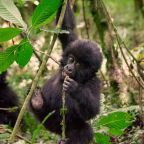
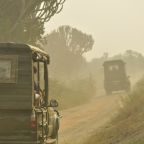
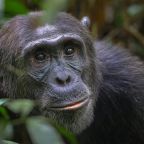
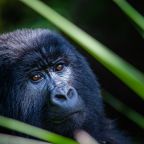
Kibale National Park is one of Uganda’s most celebrated wildlife destinations and is widely recognized as the Primate Capital of East Africa. Covering approximately 795 square kilometers of lush tropical rainforest in western Uganda, the park is famous for offering the best chimpanzee trekking experience in the country while protecting one of the highest concentrations of primates in Africa. For nature lovers, photographers, birdwatchers, researchers, and adventure travellers, Kibale National Park provides an unforgettable safari experience that combines rich biodiversity with spectacular forest scenery.
Unlike the vast savannah parks where visitors spend hours searching for wildlife, Kibale offers intimate encounters beneath a dense rainforest canopy. Every walk through the forest reveals towering mahogany trees, ancient fig trees, colorful butterflies, countless bird species, and playful primates swinging effortlessly through the branches. The sounds of chimpanzees calling across the forest, birds singing overhead, and insects humming beneath the canopy create an atmosphere unlike anywhere else in Uganda.
For travellers planning a Uganda safari, Kibale National Park pairs perfectly with Queen Elizabeth National Park, Bwindi Impenetrable National Park, Lake Mburo National Park, and the beautiful Lake Bunyonyi, making it one of the essential stops on any wildlife itinerary.
Having guided numerous visitors through Uganda’s forests, Hillary, a local wildlife photographer and experienced safari guide, leads personalized chimpanzee trekking and wildlife photography trips in Kibale. His firsthand knowledge of animal behaviour, lighting conditions, and rainforest ecosystems helps guests capture incredible wildlife photographs while learning about the forest from a local perspective.
Why Visit Kibale National Park?
Kibale National Park is more than just a chimpanzee trekking destination. It is one of Africa’s richest ecosystems, supporting an extraordinary diversity of wildlife, birds, insects, plants, and mammals. With thirteen recorded primate species, Kibale has earned international recognition as one of the world’s premier rainforest conservation areas.
Many visitors describe Kibale as one of the highlights of their Uganda safari because the forest offers experiences that cannot be found elsewhere. Watching wild chimpanzees communicate, feed, groom one another, or leap effortlessly through towering trees leaves lasting memories for every traveller.
The park is especially attractive because of its accessibility. Located between Kampala and Queen Elizabeth National Park, Kibale fits naturally into many safari itineraries without requiring long detours. Whether travellers are coming from Entebbe, Fort Portal, or Queen Elizabeth National Park, reaching Kibale is relatively straightforward, making it a favorite destination for both first-time visitors and returning safari enthusiasts.
For photographers, the rainforest presents endless opportunities to capture dramatic wildlife portraits, mist-covered landscapes, towering tropical trees, and colorful birds. Every season brings unique photographic conditions, ensuring that no two visits are ever the same.
History of Kibale National Park
The story of Kibale National Park reflects Uganda’s long commitment to protecting its natural heritage. The forest was initially managed as a forest reserve in 1932 to conserve valuable hardwood tree species and preserve the area’s biodiversity. Over the decades, increasing recognition of its ecological importance led to stronger conservation measures.
In 1993, the Ugandan government officially gazetted Kibale as a national park under the management of the Uganda Wildlife Authority (UWA). Since then, the park has become one of Uganda’s leading ecotourism destinations while serving as a globally important center for primate research and conservation.
Scientists from around the world continue to study chimpanzees and other primates in Kibale, contributing valuable knowledge about animal behaviour, forest ecology, and conservation strategies. The long-term research conducted in Kibale has significantly improved understanding of chimpanzee social structures, communication, and habitat use.
Today, tourism plays an essential role in supporting conservation efforts while creating employment opportunities for nearby communities through guiding, accommodation, handicrafts, and cultural tourism initiatives.
Where is Kibale National Park Located?
Kibale National Park is located in western Uganda, stretching across the districts of Kabarole, Kamwenge, Kyenjojo, and Kasese. The park lies close to the charming tourism town of Fort Portal, which serves as the primary gateway for visitors.
Its central location makes Kibale an ideal stop on Uganda’s famous western safari circuit. Many traveller’s combine Kibale with Queen Elizabeth National Park for classic wildlife viewing before continuing south to Bwindi Impenetrable National Park for mountain gorilla trekking and finishing their journey at the scenic Lake Bunyonyi.
The surrounding landscape is equally impressive, featuring volcanic crater lakes, tea plantations, rolling hills, and rural villages that showcase Uganda’s stunning natural beauty.
How to Get to Kibale National Park
Traveling to Kibale National Park is relatively easy thanks to Uganda’s improving road network and domestic flight options.
The most common route begins in Entebbe or Kampala, where visitors drive west through Mityana, Mubende, and Fort Portal before arriving at Kibale. The journey takes approximately five to six hours, depending on road conditions and planned stopovers.
Many safari itineraries include scenic stops along the way, allowing visitors to enjoy tea plantations, roadside markets, and breathtaking countryside views.
Travelers already exploring western Uganda often reach Kibale from Queen Elizabeth National Park, a drive of approximately two to three hours depending on which sector of the park they are departing from.
For those seeking faster travel, scheduled domestic flights connect Entebbe International Airport to Kasese Airstrip, followed by a short road transfer to Kibale National Park.
The Landscape of Kibale National Park
One of the reasons Kibale feels so different from Uganda’s savannah parks is its incredibly diverse landscape. The forest sits at elevations ranging from approximately 1,100 to 1,600 meters above sea level, creating a cool tropical climate that supports remarkable biodiversity.
Towering mahogany trees, strangler figs, ironwood trees, swamp forests, grasslands, and riverine habitats combine to form one of East Africa’s richest rainforest ecosystems.
Walking beneath the forest canopy, visitors quickly notice the changing vegetation. Dense vines hang from enormous trees while sunlight filters through the leaves, creating beautiful natural lighting that photographers particularly appreciate.
The forest floor is alive with insects, mushrooms, ferns, and colorful flowers, making every walk an opportunity to discover something new.
Climate and Weather
Kibale National Park experiences a pleasant tropical climate throughout the year. Daytime temperatures generally range between 23°C and 27°C, while cooler mornings and evenings create comfortable trekking conditions.
Rainfall occurs throughout the year, although two drier seasons usually occur between June and September and from December to February.
Unlike many destinations where rain limits travel, rainfall enhances Kibale’s beauty. The forest becomes greener, rivers flow more strongly, and mist frequently drifts through the canopy, producing magical scenery for photographers.
Because weather changes quickly, visitors should always carry waterproof clothing and protect camera equipment from moisture.
Best Time to Visit Kibale National Park
Kibale National Park can be visited year-round, but each season offers different advantages depending on travellers’ interests.
The dry seasons from June to September and December to February provide easier hiking conditions as forest trails are generally less slippery. Wildlife viewing remains excellent during these months, making them popular for chimpanzee trekking.
The wetter months of March to May and October to November transform the forest into an incredibly lush environment. While trails become more challenging, photographers often prefer these months because the rainforest appears vibrant, with dramatic mist, saturated green vegetation, and soft natural light that enhances wildlife images.
Birdwatchers may also find the rainy seasons particularly rewarding, as migratory species join resident forest birds during parts of the year.
Wildlife of Kibale National Park
Although chimpanzees are the park’s most famous residents, Kibale protects an astonishing variety of wildlife.
The park is home to approximately 70 mammal species, including forest elephants, buffaloes, giant forest hogs, bushbucks, duikers, bush pigs, and several species of small carnivores.
However, primates remain the stars of Kibale. The park supports one of the highest densities of primates anywhere in Africa, making it one of the world’s premier destinations for observing these intelligent animals in their natural environment.
The forest ecosystem provides abundant food resources throughout the year, allowing primate populations to thrive.
Chimpanzees: The Stars of Kibale National Park
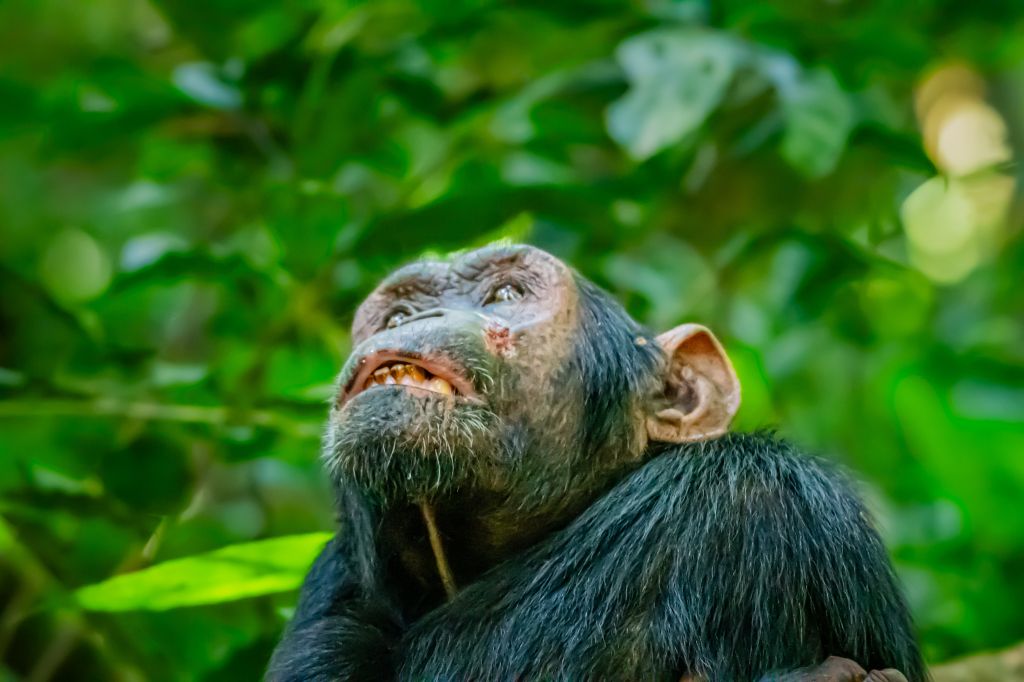
The greatest attraction in Kibale National Park is undoubtedly its population of wild chimpanzees. More than 1,500 chimpanzees inhabit the forest, making it Uganda’s best destination for chimpanzee trekking.
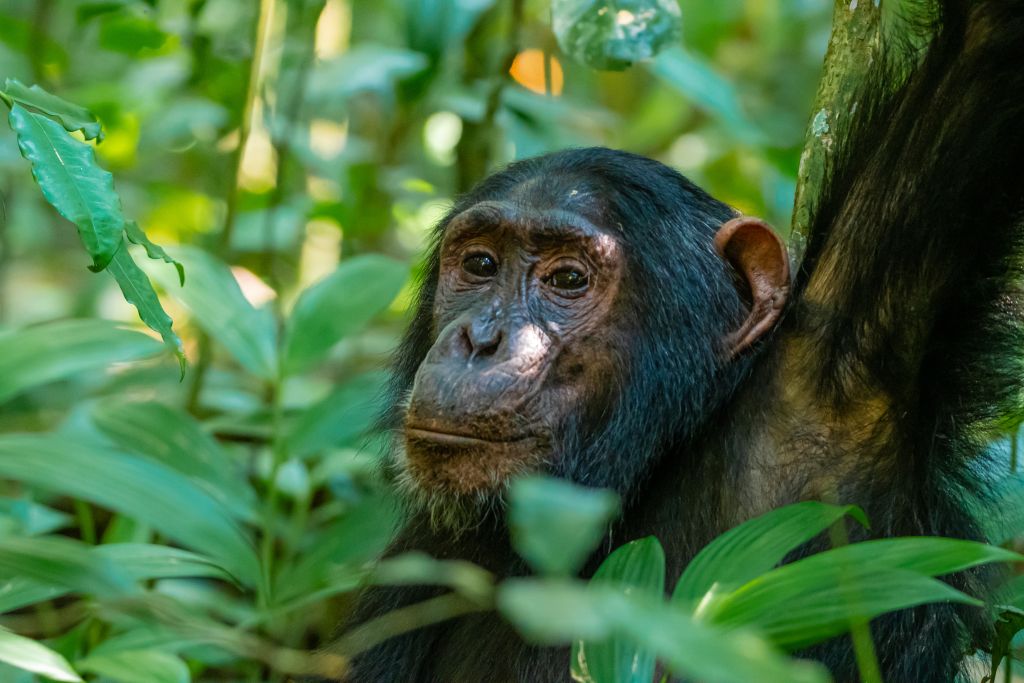
Chimpanzees share approximately 98% of human DNA, and observing their behaviour offers fascinating insights into our closest living relatives. Visitors often witness chimpanzees feeding on fruits, communicating through loud vocalizations, grooming one another, caring for their young, and skillfully moving through the forest canopy.
Each trekking experience is unique because chimpanzees are entirely wild and free-ranging. Rangers track their movements early each morning before leading small groups into the forest to locate the community.
The excitement builds as distant pant-hoots echo through the trees, signalling that the chimpanzees are nearby. Once found, visitors spend an unforgettable hour observing these remarkable primates as they go about their daily activities.
Unlike mountain gorillas, chimpanzees are highly active and constantly moving, making photography both exciting and rewarding. Capturing their expressions, playful interactions, and athletic movements requires patience, quick reflexes, and an understanding of rainforest lighting.
For photographers joining safaris with Hillary Uganda Trips, the experience goes beyond simply seeing chimpanzees. Hillary shares practical wildlife photography techniques, helps guests adjust camera settings for low-light rainforest conditions, and explains chimpanzee behavior to anticipate memorable photographic moments.
Chimpanzee Trekking in Kibale National Park
Chimpanzee trekking is the signature activity in Kibale National Park and one of the most rewarding wildlife experiences in Africa. Every year, thousands of travelers visit Uganda specifically to walk through Kibale’s ancient rainforest in search of wild chimpanzees. Unlike a traditional game drive where wildlife is viewed from a vehicle, chimpanzee trekking is an immersive experience that allows visitors to explore the forest on foot while accompanied by experienced Uganda Wildlife Authority (UWA) ranger guides.
The adventure begins early in the morning at the Kanyanchu Visitor Centre, where visitors receive a briefing about safety regulations, chimpanzee behavior, and trekking etiquette. Rangers explain the importance of maintaining a respectful distance, avoiding loud noises, and protecting the health of these endangered primates by following conservation guidelines.
Once the briefing is complete, the group enters the rainforest. Every trek is unique because chimpanzees are wild animals that roam freely throughout the forest. Rangers locate them by following fresh feeding signs, listening for their distinctive calls, and using years of field experience to predict their movements.
The excitement grows as the forest comes alive with the sounds of birds, insects, and distant chimpanzee vocalizations. Suddenly, the first chimpanzees appear high in the trees or feeding quietly on the forest floor. Visitors are then allowed one unforgettable hour to observe and photograph these fascinating primates.
During this hour, chimpanzees may groom one another, climb towering trees, chase playful juveniles, or communicate through loud pant-hoots that echo across the forest. Every behavior provides an incredible opportunity to appreciate their intelligence and complex social relationships.
Because chimpanzees move quickly, photographers should remain alert and keep their cameras ready at all times. Fast shutter speeds and continuous autofocus are recommended to capture sharp images of these energetic primates.

The Chimpanzee Habituation Experience
For travelers seeking a deeper wildlife encounter, the Chimpanzee Habituation Experience is one of the most extraordinary activities available in Uganda.
Unlike the standard trek, where visitors spend one hour with a fully habituated community, the habituation experience allows participants to spend up to four hours observing chimpanzees alongside researchers and wildlife experts.
This experience offers a rare opportunity to witness the daily lives of chimpanzees from the moment they leave their nests in the morning until they continue their search for food throughout the forest.
Visitors gain valuable insight into chimpanzee behavior, communication, feeding habits, territorial movements, and family dynamics. Researchers explain how habituation works and the importance of long-term conservation efforts in protecting Uganda’s primate populations.
For wildlife photographers, the extended time means greater opportunities to experiment with different camera angles, compositions, and lighting conditions while capturing unique behavioral moments that are often missed during standard treks.
Hillary frequently recommends the habituation experience to photographers because the additional time dramatically increases the chances of producing award-winning wildlife images.
Other Primates Found in Kibale National Park
Although chimpanzees are the park’s biggest attraction, Kibale National Park is home to thirteen species of primates, making it one of Africa’s richest primate habitats.
Walking through the forest, visitors often encounter playful monkeys swinging through the canopy, quietly feeding in fruiting trees, or resting high above the trails. Each species adds another layer of excitement to every forest walk.
Among the most commonly seen primates are the black-and-white colobus monkeys, whose long white tails create striking photographic subjects against the dark green rainforest. Red-tailed monkeys are equally popular because of their colorful facial markings and curious personalities.
Blue monkeys frequently move through the middle levels of the forest, while grey-cheeked mangabeys often travel in noisy social groups. Olive baboons occasionally appear near the forest edges, and the elusive L’Hoest’s monkey can sometimes be spotted by patient observers.
The park is also home to vervet monkeys, Uganda mangabeys, bush babies, pottos, and nocturnal primates that become active after sunset.
This incredible diversity makes Kibale National Park far more than just a chimpanzee destination—it is one of the world’s finest locations for primate enthusiasts.
Bird Watching in Kibale National Park
Birdwatchers from around the world travel to Kibale National Park to search for its remarkable birdlife. More than 375 bird species have been recorded within the park, making it one of Uganda’s top birding destinations.
The forest supports an impressive variety of Albertine Rift endemics, colorful forest specialists, and migratory species.
Among the most sought-after birds are the African pitta, green-breasted pitta, black bee-eater, African grey parrot, blue-headed sunbird, crowned eagle, great blue turaco, yellow-spotted barbet, and the spectacular Narina trogon.
Early morning birding walks offer the best opportunities for photography as birds become most active shortly after sunrise.
For photographers, Kibale provides excellent opportunities to combine primate photography with forest bird photography, creating a diverse wildlife portfolio during a single safari.
Bigodi Wetland Sanctuary
Located just outside Kibale National Park, Bigodi Wetland Sanctuary is one of Uganda’s finest community conservation success stories.
Managed by the local community, this beautiful wetland protects papyrus swamps, forest patches, grasslands, and small streams that support exceptional biodiversity.
A guided walk through Bigodi reveals a completely different ecosystem from Kibale’s dense rainforest. Visitors may encounter several monkey species, including black-and-white colobus monkeys, blue monkeys, vervet monkeys, and red-tailed monkeys.
Birdlife is equally impressive. The sanctuary is famous for the elusive Great Blue Turaco, one of Uganda’s most photographed birds.
The boardwalks and open trails make Bigodi easier to photograph than dense rainforest, particularly for bird photographers and beginners learning wildlife photography techniques.
By visiting Bigodi, travelers also contribute directly to local conservation and community development initiatives.
Nature Walks and Forest Exploration
Beyond chimpanzee trekking, Kibale National Park offers guided forest walks that reveal the incredible diversity of the rainforest ecosystem.
These walks focus on medicinal plants, towering hardwood trees, butterflies, insects, reptiles, and smaller mammals often overlooked during chimpanzee treks.
Experienced guides explain the ecological importance of the forest while sharing fascinating stories about traditional uses of medicinal plants by surrounding communities.
For photographers interested in macro photography, forest textures, fungi, orchids, butterflies, and unique plant life provide endless creative opportunities.
Exploring the Crater Lakes
The region surrounding Kibale National Park contains dozens of spectacular volcanic crater lakes formed thousands of years ago.
These peaceful lakes are surrounded by rolling hills, tea plantations, forests, and picturesque villages, making them ideal destinations for landscape photography and relaxation after chimpanzee trekking.
Popular crater lakes include Lake Nyinambuga, Lake Nkuruba, and Lake Nyabikere.
Many travelers choose to spend an afternoon hiking between these lakes while enjoying panoramic viewpoints across western Uganda’s beautiful countryside.
The reflections, misty mornings, and dramatic sunsets create exceptional photographic conditions throughout the year.
Wildlife Photography in Kibale National Park
Kibale National Park presents unique opportunities and challenges for wildlife photographers.
The rainforest environment often features rapidly changing light conditions as sunlight filters through the dense canopy. Success depends on understanding both camera settings and animal behavior.
Photographers should prepare for low-light situations by using fast lenses, higher ISO settings, and continuous autofocus. Shooting in RAW format allows greater flexibility during editing while preserving image quality.
Chimpanzees rarely remain still for long, making anticipation essential. Watching their body language helps photographers predict movements such as climbing, feeding, or interacting with family members.
Unlike open savannah photography, rainforest photography emphasizes storytelling. Images that include surrounding vegetation often produce stronger compositions than tightly cropped portraits alone.
Photography Safaris with Hillary Uganda Trips
For travelers who want more than simply seeing wildlife, Hillary Uganda Trips offers photography-focused safaris designed specifically for photographers of all experience levels.
As a local wildlife photographer and experienced safari guide, Hillary has spent years exploring Kibale National Park and other protected areas across Uganda. His firsthand knowledge of chimpanzee behavior, forest lighting, and photography techniques helps guests maximize every wildlife encounter.
Throughout each safari, Hillary shares practical advice on camera settings, composition, positioning, and timing while helping photographers capture natural behavior rather than simply record sightings.
Whether you’re using a professional DSLR, mirrorless camera, bridge camera, or smartphone, his personalized guidance helps you return home with stronger wildlife photographs and unforgettable memories.
His local knowledge also extends beyond wildlife, introducing visitors to Uganda’s landscapes, culture, and conservation efforts that many travelers never experience on standard safaris.
Plan Your Kibale Safari with a Local Expert
Whether you’re dreaming of photographing wild chimpanzees, exploring Bigodi Wetland Sanctuary, or combining Kibale with Bwindi and Queen Elizabeth National Park, Hillary Uganda Trips can create a personalized safari that matches your interests, travel style, and photography goals.
Contact Hillary Uganda Trips Today
📱 WhatsApp: +256726436969
📧 Email: hillary@hillaryugandatrips.com
As a local wildlife photographer and guide, Hillary shares firsthand knowledge, photography techniques, and authentic experiences that help visitors discover Uganda beyond the ordinary safari.
Combine Kibale with Other Uganda Safari Destinations
One of Kibale’s greatest advantages is its strategic location along Uganda’s famous western safari circuit.
Many visitors combine Kibale National Park with Queen Elizabeth National Park, where they enjoy game drives, boat cruises along the Kazinga Channel, and opportunities to photograph the famous tree-climbing lions of Ishasha.
Continuing south, travelers often visit Bwindi Impenetrable National Park for unforgettable mountain gorilla trekking before relaxing on the shores of Lake Bunyonyi, one of Africa’s most scenic lakes.
These destinations complement one another perfectly, offering an incredible combination of rainforest primates, classic African wildlife, spectacular landscapes, and rich cultural experiences.
Where to Stay in Kibale National Park
Finding the right accommodation is an important part of planning a successful visit to Kibale National Park. Fortunately, the area offers a wide variety of lodges ranging from luxurious forest retreats to comfortable mid-range properties and budget-friendly guesthouses. Most accommodations are located near Kanyanchu Visitor Centre, making it easy to reach the starting point for chimpanzee trekking.
Whether you are visiting for a single night or spending several days exploring the rainforest, staying close to the park allows you to enjoy the peaceful atmosphere of western Uganda while listening to birds and primates from the comfort of your lodge.
Luxury Lodges
Luxury travelers will find exceptional lodges that combine comfort with breathtaking rainforest views. These lodges typically feature spacious cottages, gourmet dining, private decks overlooking the forest, and personalized service.
Popular luxury options include:
- Ndali Lodge
- Primate Lodge Kibale
- Kyaninga Lodge
- Crater Safari Lodge
- Papaya Lake Lodge
Many of these lodges are surrounded by forests or crater lakes, offering outstanding opportunities for bird photography and nature walks even before your safari activities begin.
Mid-Range Accommodation
Mid-range lodges provide excellent value without compromising comfort. They are ideal for couples, families, photographers, and small groups seeking quality accommodation at reasonable prices.
Recommended options include:
- Turaco Treetops
- Kibale Forest Camp
- Isunga Lodge
- Chimpanzee Forest Lodge
These properties often include comfortable rooms, excellent local cuisine, knowledgeable staff, and beautiful natural surroundings.
Budget Accommodation
Backpackers and budget-conscious travelers will also find several affordable guesthouses and campsites near Kibale National Park.
Budget accommodation allows visitors to experience one of Africa’s finest rainforests while keeping travel costs manageable.
Sample Kibale National Park Itineraries
Two-Day Kibale Safari
A two-day itinerary is perfect for travelers with limited time.
On the first day, visitors travel from Kampala or Entebbe to Kibale National Park, enjoying scenic views of tea plantations and crater lakes along the way. After checking into the lodge, many travelers visit Bigodi Wetland Sanctuary for an afternoon nature walk and birdwatching experience.
The second day begins with early morning chimpanzee trekking before returning to the lodge for lunch and continuing to Queen Elizabeth National Park or back to Kampala.
Three-Day Kibale Adventure
A three-day safari allows visitors to explore Kibale more thoroughly.
Besides chimpanzee trekking, travelers can participate in the Chimpanzee Habituation Experience, crater lake hikes, community visits, birdwatching excursions, and forest walks.
This itinerary is particularly suitable for wildlife photographers who benefit from spending additional time in the forest.
Five-Day Uganda Primate Safari
Many visitors combine Kibale National Park with Bwindi Impenetrable National Park to experience both chimpanzees and mountain gorillas.
A typical five-day itinerary includes:
- Arrival in Kibale
- Chimpanzee trekking
- Transfer through Queen Elizabeth National Park
- Gorilla trekking in Bwindi
- Relaxation at Lake Bunyonyi
This combination showcases Uganda’s remarkable primate diversity while providing unforgettable photography opportunities.
Combining Kibale with Other National Parks
One of Uganda’s greatest strengths as a safari destination is the ease of combining multiple ecosystems within a single trip.
Queen Elizabeth National Park
Located only a few hours from Kibale, Queen Elizabeth National Park offers classic African game drives, the famous Kazinga Channel boat cruise, tree-climbing lions in Ishasha, elephants, buffaloes, hippos, crocodiles, and hundreds of bird species.
Together, Kibale and Queen Elizabeth create one of East Africa’s most diverse safari combinations.
Bwindi Impenetrable National Park
After photographing chimpanzees in Kibale, many visitors continue south to Bwindi for the unforgettable experience of trekking mountain gorillas.
Seeing both chimpanzees and gorillas during the same safari is often considered the highlight of visiting Uganda.
Lake Bunyonyi
After several days of rainforest trekking, Lake Bunyonyi offers the perfect place to relax.
Surrounded by terraced hills and dotted with twenty-nine scenic islands, the lake provides opportunities for canoeing, cultural experiences, birdwatching, swimming, and landscape photography.
Visitors interested in extending their journey can explore several detailed guides on hillaryugandatrips.com, including:
- Uganda Photo Safaris with a Local
- Bwindi Impenetrable National Park Complete Guide
- Queen Elizabeth National Park Complete Guide
- Best Places to Photograph Primates in Uganda
- Kazinga Channel Boat Safari Guide
Linking these destinations together creates a comprehensive Uganda safari itinerary while strengthening your travel planning.
Conservation in Kibale National Park
Kibale National Park plays a vital role in protecting Uganda’s biodiversity.
The park safeguards one of East Africa’s largest remaining tropical rainforests while preserving endangered chimpanzees and numerous other wildlife species.
Conservation efforts involve close collaboration between the Uganda Wildlife Authority, researchers, local communities, conservation organizations, and tourism operators.
Tourism revenue generated through chimpanzee permits directly contributes to protecting wildlife, supporting ranger patrols, maintaining park infrastructure, and funding community development projects.
Visitors who choose responsible tour operators help ensure that future generations will continue to experience Kibale’s remarkable wildlife.
Responsible Tourism
Responsible travel is essential for protecting Kibale’s fragile rainforest ecosystem.
Visitors should always respect park regulations by maintaining appropriate distances from chimpanzees, avoiding littering, and following the instructions of Uganda Wildlife Authority rangers.
Flash photography should never be used around chimpanzees because it may disturb the animals.
Keeping noise levels low allows wildlife to behave naturally while improving everyone’s viewing experience.
Supporting locally owned lodges, guides, craft markets, and community tourism initiatives also ensures that neighboring communities benefit directly from conservation.
Photography Tips from Hillary
Photographing wildlife inside a rainforest presents unique challenges, but with preparation and patience, photographers can capture extraordinary images.
As a local wildlife photographer and safari guide, Hillary has spent countless hours photographing Uganda’s primates in varying weather conditions. His experience helps visitors understand how to work with changing light, anticipate chimpanzee movements, and compose compelling wildlife images.
One of the most valuable pieces of advice is to photograph behavior rather than simply portraits. Images showing grooming, feeding, communication, or playful interactions often tell stronger stories.
Rain should never discourage photographers. Mist, rain droplets, and soft overcast light frequently create dramatic rainforest images that are impossible to capture during bright sunshine.
Photographers should also remember to occasionally lower their cameras and simply enjoy the experience. Watching wild chimpanzees in their natural habitat is one of Africa’s greatest wildlife encounters.
Why Travel with Hillary Uganda Trips?
Planning a safari with a knowledgeable local guide can transform an ordinary trip into an unforgettable adventure.
Hillary Uganda Trips specializes in tailor-made safaris that combine wildlife viewing, photography, conservation, and authentic cultural experiences across Uganda.
As both a professional wildlife photographer and experienced local guide, Hillary understands where wildlife is most active, how changing weather affects photography, and how to position visitors for the best photographic opportunities.
Guests receive practical photography guidance throughout the journey, regardless of whether they use professional camera equipment or smartphones.
Every safari is customized according to individual interests, allowing travelers to spend more time where they enjoy photography most.
Frequently Asked Questions
Is Kibale National Park worth visiting?
Absolutely. Kibale National Park is considered one of Africa’s finest rainforest destinations and offers the best chimpanzee trekking experience in Uganda.
How much does chimpanzee trekking cost?
Chimpanzee permit prices are determined by the Uganda Wildlife Authority and may change over time. Visitors should always confirm current permit fees when planning their safari.
How difficult is chimpanzee trekking?
Most treks are moderately challenging and involve walking through forest trails. A reasonable level of fitness is recommended, although experienced guides adjust the pace according to the group.
Can children participate?
Standard chimpanzee trekking generally requires participants to meet the minimum age requirement established by the Uganda Wildlife Authority.
What should I pack?
Visitors should bring waterproof hiking boots, lightweight rain gear, long trousers, insect repellent, gardening gloves for steep sections, drinking water, snacks, sunscreen, and camera equipment.
Is Kibale safe?
Yes. Kibale National Park is considered one of Uganda’s safest tourism destinations. Professional Uganda Wildlife Authority rangers accompany every trekking group.
Final Thoughts
Kibale National Park is much more than Uganda’s premier chimpanzee trekking destination. It is a thriving rainforest ecosystem where ancient trees, colorful birds, fascinating primates, and breathtaking landscapes come together to create one of Africa’s most rewarding safari experiences.
Whether you are watching wild chimpanzees leap effortlessly through the canopy, photographing the spectacular Great Blue Turaco in Bigodi Wetland Sanctuary, hiking around volcanic crater lakes, or learning about rainforest conservation from experienced local guides, every day spent in Kibale offers unforgettable memories.
For photographers, birdwatchers, wildlife enthusiasts, researchers, and first-time safari travelers alike, Kibale National Park deserves a place at the top of every Uganda travel itinerary.
Exploring the park with Hillary, a local wildlife photographer and guide, adds another dimension to the experience. His firsthand knowledge of Uganda’s wildlife, photography techniques, and hidden gems helps visitors gain a deeper appreciation for the country’s incredible natural heritage while returning home with exceptional photographs and lifelong memories.
Start Planning Your Kibale National Park Safari
Ready to experience Uganda’s incredible rainforest and meet our closest relatives in the wild?
Hillary Uganda Trips offers customized chimpanzee trekking safaris, wildlife photography tours, birdwatching adventures, and complete Uganda safari packages tailored to your interests and schedule.
Contact Hillary Uganda Trips
📱 WhatsApp: +256726436969
📧 Email: hillary@hillaryugandatrips.com
Get in touch today to begin planning your unforgettable journey to Kibale National Park and discover why Uganda is known as the Pearl of Africa.