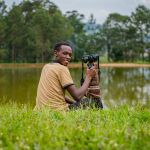
By Hillary , local guide and wildlife photographer | Hillary Uganda Trips
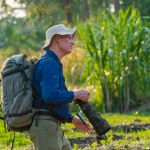
The best wildlife photographs are rarely luck. They come from being in the right place, at the right hour, with someone who knows what the animals will do next. I’ve spent years guiding travelers through Uganda’s forests, savannahs and lakes with a camera in my own hands, and I’ve learned that the gap between a nice snapshot and a frame you’ll print and hang on a wall is usually a good guide.
A Uganda photo safari is different from a standard tour. The pace is slower, the timing is built around light, and the vehicle, the route and the stops all serve your photography. In this guide, I explain how a photo safari with a local professional works, where the best shots are, what gear to bring, how to shoot gorillas, chimps, big game and birds, and how to plan your trip.
Uganda Photo Safari at a Glance
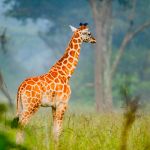
- Best subjects: Mountain gorillas, chimpanzees, golden monkeys, elephants, lions, giraffes, hippos, shoebill storks, birds and highland landscapes
- Best parks for photography: Bwindi, Mgahinga, Kibale, Queen Elizabeth, Murchison Falls and Lake Bunyonyi
- Best months: June to September and December to February (dry seasons)
- Ideal trip length: 7 to 12 days, so you have time for the light and the animals
- Group size: Small groups or private trips, so everyone gets a good position
- Pace: Slower, with early starts and long stops at the best locations
- Skill level: Beginners to experienced photographers
Why Go on a Photo Safari with a Local Professional?
Someone Who Reads the Light
Good guides know where the sun will rise and fall, which side of a track to park on and how long to wait for the light to soften. That knowledge turns a flat midday photo into a golden-hour portrait.
Someone Who Reads the Animals
I watch behavior, not just animals. A twitching ear, a change in the herd’s direction, a lion getting restless: these small signals tell me when to turn off the engine and wait for the shot.
Someone Who Knows the Places
A local knows which tracks are quiet, which viewpoints are best at sunrise, which lodges have the best light and which trail to take when the main one is crowded. We live here, so we don’t need to guess.
Someone Who Respects the Animals
Ethical photography matters. A good guide never baits, harasses or crowds wildlife, and follows park rules on distance and behavior. The animals come first, and that’s how you get relaxed, natural pictures.
Someone Who Helps You Improve
If you want feedback on settings, composition or timing, a photographer-guide can help you in the field, not just after the trip.
What a Photo Safari with Hillary Uganda Trips Looks Like
Our photographic trips are built differently from a standard itinerary.
- Early starts: We’re in position before sunrise to catch the first light and the most active animals.
- Long stops: We don’t rush from sighting to sighting. When a subject is worth waiting for, we wait.
- Right vehicle setup: A 4×4 safari vehicle with a window seat or pop-up roof for every guest.
- Flexible plans: If the light, animals or weather change, we adapt.
- Local knowledge: I guide on the ground and share camera tips as we go.
To learn more about the service, see our photographic guide service page, or read my guide to wildlife photography in Uganda with a local.
Planning a photo safari? Email Hillary; The Photographic Leader at hillary@hillaryugandatrips.com and tell me what you’d love to capture.
The Best Places for Photography in Uganda
Bwindi Impenetrable National Park: Mountain Gorillas
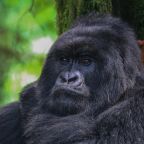
Gorillas are the dream subject for many photographers, and also one of the hardest. The forest is dark, the animals are often in dense vegetation, and you get one hour. Good preparation makes all the difference.
- Light: The canopy is shady, so bring a fast lens and be ready to raise your ISO.
- Distance: You’ll be about 7 meters away, so a 70 to 200mm or 100 to 400mm zoom is ideal.
- No flash: It’s not allowed, and it disturbs the animals.
- Timing: Wait for eye contact and natural behavior, such as a mother with a baby or a silverback at rest.
For permits, routes and tips, read our guide to the Kigali to Uganda gorilla trekking route and our 4 days gorillas and golden monkeys safari.
Mgahinga Gorilla National Park: Golden Monkeys and Volcano Views
Mgahinga offers a different kind of image: golden monkeys in the bamboo, misty forest and the Virunga volcanoes rising behind. It’s excellent for both wildlife and landscape work. See our Mgahinga Gorilla National Park guide and our golden monkey trekking guide.
Kibale National Park: Chimpanzees and Forest Primates
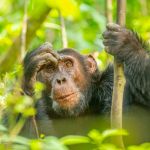
Chimps are fast, noisy and expressive, which makes them wonderful and challenging subjects. You’ll want a fast shutter speed and a high ISO. Kibale also has red colobus, black-and-white colobus and other monkeys. Read our Kibale National Park complete guide and chimpanzee trekking in Uganda guide. For a primate-focused shooting plan, see my best places to photograph primates in Uganda.
Queen Elizabeth National Park: Boats, Lions and Plains
The Kazinga Channel is a great place to photograph hippos, buffalo, elephants and birds from a boat. On land, the Kasenyi plains and Ishasha sector offer big herds and the famous tree-climbing lions. See our Kazinga Channel guide and our Kyambura Gorge chimpanzee trekking guide.
Murchison Falls National Park: Big Game and the Nile
Murchison offers elephants, giraffes, lions, hippos and the dramatic falls, plus the shoebill stork in the delta. The open savannah and Nile backdrop give you varied compositions. Read our Murchison Falls safari guide.
Lake Bunyonyi: Landscapes, Canoes and Birds
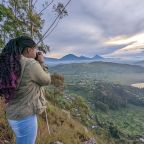
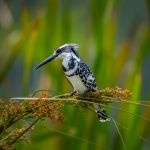
My home lake is a gift for photographers: misty sunrises, dugout canoes, terraced hills and kingfishers on the papyrus. Our bird watching trip at Lake Bunyonyi and guided boat trip for island exploration are built with photographers in mind. Read the full Lake Bunyonyi travel guide.
Mabamba Swamp: The Shoebill
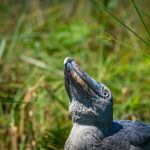
Near Entebbe, Mabamba Swamp is one of the best places in Africa to look for the shoebill stork, usually by canoe. It pairs well with a first or last day in Uganda, and it’s included in our 14 days best of Uganda safari with Mabamba Swamp tour.
Best Time for a Uganda Photo Safari
Dry Seasons: June to September and December to February
These months offer the clearest skies, drier trails and easier travel. Wildlife also gathers near water, making animals easier to find. It’s the busiest period, so book early.
Wet Seasons: March to May and October to November
The landscapes are green and dramatic, and storm light can create wonderful skies. Trails are muddier, and you need to protect your gear, but there are fewer visitors and more atmosphere.
Insider tip: Don’t ignore the rain. Soft, overcast light is excellent for forest primates, and fresh green backgrounds make wildlife pop.
For a full breakdown, read our best time to visit Uganda guide.
The Photography Gear I Recommend
You don’t need the most expensive kit, but a few choices make a big difference.
- A camera body with good low-light performance: Forests are dark, so clean high-ISO results help.
- A telephoto zoom: A 100 to 400mm or similar lens covers most wildlife.
- A fast mid-range zoom or prime: A 24 to 70mm or 70 to 200mm lens with a wide aperture is excellent for gorillas, chimps and portraits.
- A wide-angle lens: For landscapes, volcano views and Lake Bunyonyi.
- Spare batteries and memory cards: Cold mornings drain batteries quickly.
- A bean bag or window mount: For steady shots from a vehicle.
- Protective gear: A dry bag, rain cover, lens cloths and a blower brush for dust.
- Binoculars: They help you find animals and birds before you raise the camera.
If you’re not sure what to bring, tell us your kit before you travel and we’ll advise.
Camera Settings That Work in Uganda
These are starting points, not rules. Adjust to the light and the situation.
Gorillas and Chimps in the Forest
- Mode: Aperture priority or manual
- Aperture: Wide open, such as f/2.8 to f/5.6
- ISO: Often 1600 to 6400 or higher, depending on your camera
- Shutter speed: At least 1/250 for gorillas and 1/500 or faster for chimps
- Focus: Continuous autofocus with eye detection if available
Big Game on the Savannah
- Aperture: f/5.6 to f/8 for sharper detail
- ISO: 200 to 800 in good light
- Shutter speed: 1/1000 or faster for moving animals, and 1/500 for resting ones
- Tip: Shoot in bursts when animals move
Birds and Boat Cruises
- Shutter speed: 1/1600 or faster for birds in flight, and at least 1/1000 on a moving boat
- Focus: Continuous autofocus, tracking mode
- Tip: Anticipate the bird’s movement and keep both eyes open
Landscapes and Lake Scenes
- Aperture: f/8 to f/11 for depth
- ISO: As low as possible
- Tip: Shoot at sunrise or sunset, and use a tripod or a steady surface
Composition Tips for Better Wildlife Photos
- Get on eye level. Eye contact makes a portrait feel alive.
- Look for layers. Combine animals, water and mountains in one frame.
- Mind the background. A clean background makes the subject stand out.
- Capture behavior. Grooming, feeding, play and calling tell better stories than static poses.
- Wait for the moment. Patience often produces the best shot.
- Include scale. A small figure in a big landscape can add drama.
- Don’t forget the details. Hands, eyes, feet and textures make strong close-ups.
Ethical Wildlife Photography
Great photographers respect the animals they photograph.
- Follow park rules on distance. For gorillas, that’s about 7 meters, and for chimps about 8 meters.
- No flash. It’s not allowed near primates, and it disturbs other wildlife.
- Never bait or call animals. Wild behavior should be natural.
- Stay quiet and calm. Sudden movements and loud voices can change the animals’ behavior.
- Stay healthy. If you’re sick on the day of a primate trek, rangers may refuse you for the animals’ safety.
- Respect people too. Always ask before photographing local people, and share the pictures when you can.
Sample Uganda Photo Safari Itineraries
7-Day Primates and Landscapes
Gorillas in Bwindi, golden monkeys in Mgahinga, Lake Bunyonyi at sunrise and sunset, with time for village portraits and birds.
10-Day Big Game, Primates and Lakes
Murchison Falls for big game and the Nile, Kibale for chimps, Queen Elizabeth for the Kazinga Channel and tree-climbing lions, then Bwindi for gorillas and Lake Bunyonyi to finish.
14-Day Complete Uganda Photo Safari
A full loop with the shoebill in Mabamba, Murchison, Kibale, Queen Elizabeth, Bwindi, Mgahinga and Lake Bunyonyi. See our 14 days best of Uganda safari with Mabamba Swamp tour and our ultimate 16 days Uganda wildlife safari.
You can also browse our full range on the day tours and safaris page. Every photo safari can be tailored to your subjects, budget and dates.
What’s Included in a Photo Safari
Every trip differs, but a typical photo safari includes:
- Airport pickup and drop-off
- A 4×4 safari vehicle with a window seat for every guest
- A professional driver-guide who is also a photographer
- Accommodation and meals as listed
- Park entry fees and activities as listed
- Bottled drinking water
- Photography guidance in the field
Permits, flights, visas, insurance and tips are usually extra. Ask us for an itemized quote. For entry details, read our guide to Uganda visa and travel requirements.
What to Pack for a Photo Safari
- Camera bodies, lenses, spare batteries and memory cards
- Dry bag, rain cover and lens cleaning kit
- Neutral-colored, lightweight clothing and a warm layer
- Waterproof jacket and sturdy boots
- Gardening gloves for gorilla and chimp treks
- Insect repellent, sunscreen, hat and sunglasses
- Binoculars and a headlamp
- Power adapter and power bank
- Reusable water bottle and a small daypack
For wider advice, see our guide to essential Uganda travel safety tips for 2026.
Why Book a Photo Safari with Hillary Uganda Trips
We’re based in Kabale, close to the gorillas, the volcanoes and Lake Bunyonyi, and we guide with a camera in hand. When you plan with us, you get:
- A photographer-guide: Learn more about me.
- Light-first planning: Our days are built around the best hours, not the busiest ones.
- Small groups: Everyone gets a good position.
- Tailor-made itineraries: Your subjects, your pace, your budget.
- Giving back: A portion of every tour supports local families through our community support projects.
- Fast, friendly support: Quick replies on WhatsApp and email.
Have questions first? Check our FAQ page or contact us directly.
Frequently Asked Questions About Uganda Photo Safaris
What is a photo safari?
A photo safari is a trip designed around photography. The timing, vehicle setup, locations and pace all focus on getting great images, with more time at each sighting and early starts for the best light.
When is the best time for a photo safari in Uganda?
June to September and December to February are best for clear skies and easier travel. The rainy months offer dramatic skies and green scenery, but trails are muddier.
Do I need professional gear?
No. A camera with a good telephoto zoom and good low-light performance is enough. Tell us your kit before you travel, and we’ll help you plan.
Can beginners join a photo safari?
Yes. Many guests are beginners, and I enjoy helping them improve in the field. We adjust the pace and advice to your level.
Can I photograph gorillas?
Yes, without flash, and from about 7 meters away. You get one hour with the gorillas. The forest is dark, so a fast lens and a high ISO help a lot.
Where can I photograph the shoebill?
Mabamba Swamp near Entebbe and the Nile delta at Murchison Falls are the best places. Sightings are never guaranteed, but local guides know the best channels and timing.
How many days do I need?
We recommend 7 to 12 days. That gives you time to visit several parks, wait for the right light and avoid rushing.
Is a photo safari more expensive?
It can be slightly more because of smaller groups and longer stays, but costs depend on your itinerary and lodges. Ask us for a free, itemized quote.
Final Thoughts: Come for the Animals, Leave with the Pictures
A photo safari in Uganda gives you more than a holiday: it gives you images you’ll be proud of. With a local professional who knows the light, the animals and the landscape, you spend less time hoping and more time shooting. Come in the dry season, bring a fast lens and a sense of patience, and let Uganda do the rest.
Ready to Plan Your Photo Safari?
Tell us your dates, group size, subjects and camera kit, and we’ll create a photo safari that fits you perfectly. No pressure, just honest advice from a local photographer who calls Uganda home.
WhatsApp us: +256726436969 Call: +256704189185 Email Hillary; The Photographic Leader: hillary@hillaryugandatrips.com
Get a free, no-obligation quote within 24 hours.