


Wildlife Photography in Uganda With a Local: A Photographer’s Guide to Capturing Uganda
Uganda wildlife photography is about much more than photographing animals. It is about understanding the landscape, reading animal behaviour, finding the right light and, sometimes, simply being patient enough to let a moment happen in front of your camera.
From the misty forests of Bwindi and Mgahinga to the open savannahs of Queen Elizabeth National Park, the waterways of Murchison Falls and the primate-rich forests of Kibale, Uganda offers remarkable variety for photographers. You can spend one morning photographing mountain gorillas in a rainforest and a few days later be watching lions, elephants, hippos, giraffes or colourful birds in a completely different habitat.
For a photographer, that variety is one of Uganda’s greatest strengths.
I am Hillary, a Ugandan professional wildlife photographer and local safari guide. I was born and raised in Uganda, and much of my work has taken me into the country’s forests, savannahs, wetlands and communities. Through Hillary Uganda Trips, I personally lead and help arrange wildlife photography experiences for travellers who want to explore Uganda with a local who understands both photography and the destinations.
This guide explains where to go, what to photograph, when to visit, what equipment to bring and why travelling with a knowledgeable local can make a real difference to your photography experience.
Why Choose Uganda for Wildlife Photography?
Uganda is sometimes overlooked by photographers who immediately think of Kenya or Tanzania for an African safari. But Uganda offers something quite different.
The country combines savannah wildlife, tropical forests, mountains, lakes, rivers and wetlands within a relatively compact travel destination. Uganda Wildlife Authority currently manages 10 national parks, including Queen Elizabeth, Murchison Falls, Kibale, Lake Mburo, Bwindi Impenetrable and Mgahinga Gorilla National Parks.
That means a photography trip can be built around several completely different subjects.
You might photograph:
- Mountain gorillas in Bwindi or Mgahinga
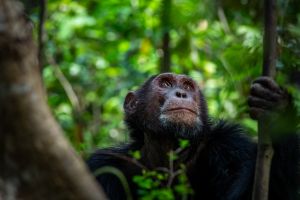
- Chimpanzees in Kibale Forest
- Lions in Queen Elizabeth National Park
- Tree-climbing lions in the Ishasha sector
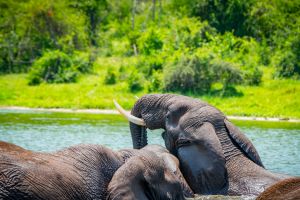
- Elephants on the savannah
- Hippos along the Kazinga Channel
- Giraffes in Murchison Falls or Lake Mburo
- Zebras and impalas around Lake Mburo
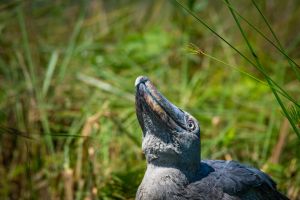
- Birds such as the shoebill, African fish eagle and great blue turaco
- Landscapes, waterfalls, forests and volcanic mountains
- Local communities and cultural experiences
For photographers, this creates an opportunity to tell a much broader story than simply collecting animal portraits.
A good Uganda photography safari can combine wildlife, landscapes, people, culture and conservation into one visual story.
Uganda Wildlife Photography With a Local Guide
One of the biggest advantages of travelling with a local photographer and guide is knowing that photography is not an afterthought.
A conventional safari guide may know where wildlife is commonly found. A photographer also thinks about light, background, angle, distance, composition and behaviour.
That difference can matter.
Wildlife photography often comes down to being in the right place at the right moment. But finding that position requires an understanding of the environment.
As a local Ugandan, I know that every destination has its own character. The forests around Bwindi and Mgahinga require a very different photographic approach from the open plains of Queen Elizabeth National Park. Photographing a gorilla under a dense forest canopy is a completely different technical challenge from photographing a lion against an open savannah background.
When I lead photography trips, I look beyond simply finding an animal. I also consider what the light is doing, where the background is, how the subject is behaving and whether there is an opportunity to create a stronger photograph.
What local knowledge can add
Travelling with a local photographer and guide can give you:
- First-hand knowledge of Ugandan destinations
- Practical understanding of local travel conditions
- Knowledge of different habitats and photographic environments
- Guidance on positioning and composition
- Help understanding animal behaviour
- A more personal and flexible experience
- Opportunities to meet and support local communities
- A better understanding of Uganda beyond the national parks
The local perspective is particularly valuable when your trip includes several regions.
For example, Kabale and Kisoro are not simply places to pass through on the way to gorilla trekking. They are part of a landscape of volcanic mountains, terraced hills, lakes, forests and communities that can add variety to a photography story.
Best Places for Wildlife Photography in Uganda
There is no single best photography destination for everyone. Your ideal route depends on what you want to photograph.
Here are some of the places I would consider when planning a Uganda wildlife photography trip.
Queen Elizabeth National Park
Queen Elizabeth National Park is one of Uganda’s most versatile wildlife photography destinations.
The park combines savannah, wetlands, forests, lakes and the Kazinga Channel. Uganda Wildlife Authority describes it as a park with diverse landscapes and wildlife, and it is one of Uganda’s most established safari destinations.
For photographers, this diversity means you can work on several types of images during the same safari.
Wildlife photography around Kasenyi
The open savannah around Kasenyi can provide opportunities to photograph lions, Uganda kob, buffaloes, elephants and other wildlife.
Open landscapes are particularly useful for photographers interested in environmental portraits because you can include more of the surrounding habitat rather than filling the entire frame with the animal.
Early morning and late afternoon are especially useful times to work with softer light.
Photographing tree-climbing lions in Ishasha
The Ishasha sector in southern Queen Elizabeth National Park is well known for its tree-climbing lions.
When conditions allow, these lions can be photographed resting in the branches of large fig trees or other suitable trees. The challenge is not simply finding the lion. It is finding a composition where the animal, branches and background work together.
This is where a photographer’s eye becomes important.
Instead of taking dozens of record shots, wait for the lion to lift its head, look towards the light, yawn, interact with another lion or create a clean silhouette against the sky.
Kazinga Channel
The Kazinga Channel offers a completely different photographic environment.
Boat trips can provide opportunities to photograph hippos, crocodiles, elephants, waterbirds and many other species from a lower perspective near the water.
The channel is also useful for bird photography. Reflections, water movement and changing light can add another dimension to the images.
Bwindi Impenetrable National Park
For many photographers, Bwindi is one of the main reasons to visit Uganda.
The forest is home to mountain gorillas, and photography here is very different from photographing animals on an open savannah.
You may be surrounded by dense vegetation, filtered light, steep terrain and constantly changing conditions.
This is not the place to expect every photograph to be perfectly lit.
Instead, embrace the atmosphere.
Mist between the trees, leaves in the foreground, shafts of light and a gorilla partially surrounded by vegetation can all help tell the story of where the animal lives.
Photographing mountain gorillas
Gorilla photography requires patience and respect.
A gorilla may be sitting quietly, feeding, climbing, interacting with another member of the group or walking through thick vegetation.
Sometimes the best image is not the closest portrait.
Look for behaviour and relationships.
A silverback looking through the vegetation can tell a stronger story about the forest than a tightly cropped face. A mother and youngster interacting can communicate something about the family structure that a simple portrait cannot.
The photography experience must always follow the rules and instructions of the guides and rangers. The welfare of the gorillas comes before getting a photograph.
Mgahinga Gorilla National Park
Mgahinga is another important destination for mountain gorilla photography.
Located in southwestern Uganda near Kisoro, the park forms part of the larger Virunga landscape. It combines montane forest with dramatic volcanic scenery.
The forest can produce challenging light, but that challenge is part of the appeal.
Mgahinga is also worth considering if you want your photography trip to include landscapes, volcanoes, primates and cultural experiences rather than focusing only on wildlife portraits.
For photographers travelling through the Kisoro area, the surrounding landscapes can also provide excellent opportunities for environmental and documentary images.
Kibale National Park
If your interest extends beyond gorillas, Kibale should be on your photography itinerary.
Kibale is particularly famous for chimpanzee tracking and its rich primate diversity.
Chimpanzees can be much more active than gorillas, which makes photography challenging. They can move through vegetation, climb trees and disappear behind leaves within seconds.
This means you need to be ready.
Continuous autofocus, a reasonably fast shutter speed and good awareness of your surroundings can be helpful.
But technical settings are only part of the equation.
Watch the animal first.
If you see a chimpanzee moving towards an opening in the canopy, prepare before it reaches the light rather than reacting after the moment has already happened.
Kibale also provides opportunities for photographing forest landscapes, birds and other primates.
Murchison Falls National Park
Murchison Falls National Park offers a very different visual experience from southwestern Uganda.
The park has broad savannah landscapes, the Nile, woodland and large areas of wildlife habitat. It is one of Uganda’s major national parks.
Photographers can look for elephants, giraffes, buffaloes, antelopes, hippos, crocodiles and numerous bird species.
The Nile adds another element to the photography.
A boat trip can give you opportunities to photograph wildlife around the river as well as landscapes and the dramatic Murchison Falls area.
Because the environment is more open than Bwindi or Kibale, you can often experiment with wider compositions and environmental wildlife portraits.
Lake Mburo National Park
Lake Mburo is smaller than some of Uganda’s other major parks, but it should not be dismissed by photographers.
It provides opportunities to photograph zebra, impala, eland, buffalo and other wildlife, as well as landscapes and birdlife.
The park is also known for walking experiences, which can offer a different perspective compared with photographing entirely from a safari vehicle. Uganda Wildlife Authority highlights Lake Mburo among the country’s wildlife destinations and promotes activities including walking safaris.
For someone building a varied Uganda photography itinerary, Lake Mburo can work particularly well as part of a southern circuit.
Lake Bunyonyi and the Kabale–Kisoro Region
Wildlife photography in Uganda does not have to mean photographing animals all day.
Around Kabale, Kisoro and Lake Bunyonyi, photographers can explore landscapes, local life, farming, traditional activities, boats and mountain scenery.
Lake Bunyonyi is surrounded by steep terraced hills and numerous small islands, creating opportunities for landscape photography throughout the day.
The region is also close to Bwindi and Mgahinga, making it a practical area to include before or after gorilla trekking.
As someone from the Kabale area, this is a part of Uganda I particularly enjoy sharing with visitors because it allows them to see a different side of the country.
When Is the Best Time for Wildlife Photography in Uganda?
Uganda can be visited throughout the year, and the best time depends on the type of photographs you want.
The country generally has two drier periods, around June to September and December to February, with wetter periods in between. Current Uganda tourism guidance notes that dry periods are generally favourable for wildlife viewing, while the wetter seasons offer their own opportunities.
Dry seasons
During drier periods, vegetation in some savannah areas can be less dense and wildlife may concentrate around reliable water sources.
For photographers, this can make animals easier to locate.
The roads and trails can also be easier to navigate in many areas, although conditions vary from destination to destination.
Wet and green seasons
Do not automatically avoid the rainy months.
Rain can create lush vegetation, dramatic skies, fresh colours and interesting photographic conditions.
Forests become particularly atmospheric when there is mist, moisture and filtered light.
For bird photographers, seasonal changes can also be important because bird populations and activity vary throughout the year.
The right question is therefore not simply, “What is the best month for photography?”
A better question is:
What do you want to photograph?
A photographer focused on gorillas, lions, birds, landscapes and cultural photography may have completely different priorities when choosing travel dates.
What Camera Equipment Should You Bring?
You do not need the most expensive camera to photograph wildlife in Uganda.
A good understanding of your equipment is more important than owning the newest body.
For a dedicated wildlife photography trip, consider carrying:
- A camera body with good autofocus performance
- A telephoto lens
- A second lens for wider environmental photographs
- Spare batteries
- Several memory cards
- A lightweight beanbag or suitable support for vehicle photography
- Lens cloths and cleaning equipment
- Rain protection for your camera
- A dry bag or waterproof backpack
- Binoculars
- A laptop or storage solution for backing up photographs
A telephoto lens in the 100–500mm or similar range can be extremely useful for safari photography.
However, there is no single perfect lens.
A longer lens is useful when animals are distant, while a shorter zoom can be more versatile when wildlife approaches the vehicle or when you want environmental portraits.
For gorilla and chimpanzee trekking, consider the weight of your equipment carefully. You will be walking through forest terrain, and carrying several heavy lenses all day can become tiring.
You can directly contact Hillary for guidance or to plan your entire trip;
WhatsApp : +256726436969
Email : hillary@hillaryugandatrips.com
Photography Settings for a Uganda Safari
There is no universal camera setting for wildlife photography.
Light changes quickly, particularly in Uganda’s forests.
As a starting point, many photographers will want to prioritise shutter speed when photographing moving animals.
For example:
Stationary wildlife:
A moderate shutter speed may be enough when the animal is still.
Moving mammals:
A faster shutter speed helps reduce motion blur.
Birds in flight:
You will generally need a much faster shutter speed.
Dark forest conditions:
You may need to increase ISO rather than allowing the shutter speed to fall so low that the image becomes blurred.
The important thing is to watch your exposure rather than blindly following a preset.
Forest photography is especially challenging because you can have a very dark background and a bright patch of sunlight falling across an animal.
Learn to watch the light.
That is one of the biggest advantages of photographing with someone who understands both Uganda’s wildlife and photography.
The Importance of Light
Wildlife photographers sometimes spend too much time thinking about equipment and not enough time watching light.
Good light can transform an ordinary wildlife encounter.
Early morning can provide soft, warm light and long shadows. Late afternoon can create similar conditions.
Around midday, the sun can be harsh, creating strong highlights and deep shadows.
That does not mean midday photography is useless. It simply requires different thinking.
You might use the harder light for a dramatic silhouette, an overhead bird, a behaviour shot or a photograph where the contrast contributes to the story.
In the forest, light behaves differently again.
Instead of looking for perfect sunlight, look for small openings where the subject separates from the background.
Wildlife Photography Is About Behaviour, Not Just Portraits
One of the biggest mistakes photographers make is trying to photograph every animal as a portrait.
Wildlife photography becomes more interesting when you photograph behaviour.
Look for:
- Feeding
- Grooming
- Playing
- Fighting
- Calling
- Walking
- Resting
- Interaction between adults and young
- Movement through the landscape
- Relationships between animals
A photograph showing behaviour can tell a story in a way that a technically perfect portrait sometimes cannot.
This is especially important when photographing gorillas and chimpanzees.
Instead of asking only, “How close can I get?”
Ask:
What is this animal doing, and what story is happening here?
Common Wildlife Photography Mistakes to Avoid
Carrying too much equipment
It is tempting to pack every lens you own.
But if you are trekking through forest terrain, unnecessary weight becomes a problem.
Take equipment you know how to use.
Chasing the perfect close-up
A close-up is not automatically a better photograph.
Leave room around the animal when the environment adds context.
Ignoring the background
A beautiful animal can still produce a weak photograph if the background is distracting.
Before pressing the shutter, quickly check what is behind your subject.
Shooting everything at the same shutter speed
Different subjects move differently.
A resting hippo, walking elephant and flying bird require different approaches.
Forgetting to watch the animal
Looking constantly through the viewfinder can make you miss behaviour happening just outside your frame.
Watch first.
Photograph second.
Relying completely on the guide
A good guide can help you find wildlife, but you are still responsible for your photography.
Learn your camera before travelling.
Know where your autofocus controls are. Practise changing ISO and shutter speed without removing your eye from the subject.
How to Photograph Wildlife Responsibly
A photograph is never more important than the welfare of the animal.
Always follow the instructions of park authorities, guides and rangers.
Do not encourage animals to move for a photograph.
Do not make unnecessary noises to attract attention.
Do not pressure wildlife for a better angle.
When photographing gorillas and other primates, follow the specific rules governing the encounter.
Responsible photography also means thinking about the communities around protected areas.
Tourism can create opportunities for local employment and community development, while conservation and tourism projects can work together to protect wildlife habitats. Uganda Wildlife Authority’s conservation programmes include work intended to benefit communities and livelihoods around protected areas.
This is one reason I believe choosing local services where possible matters.
Your trip is not only about the photographs you take home. It can also contribute to the people and places that make the experience possible.
Why Travel With Hillary Uganda Trips?
Hillary Uganda Trips is a locally owned Ugandan tour company focused on authentic experiences across Uganda.
I personally lead photography trips whenever the itinerary and arrangements allow. My background as a local wildlife photographer and guide means photography can be part of the planning rather than something added at the last minute.
The aim is simple: understand what you want to photograph and then build a journey around those interests.
For one traveller, that might mean gorillas and chimpanzees.
For another, it could be lions, elephants and birds.
A photographer interested in landscapes might want to spend more time around Lake Bunyonyi, the Virunga region or Murchison Falls.
Someone interested in documentary photography may want to combine wildlife with local communities and cultural experiences.
Because I am Ugandan and have travelled extensively within the country, I can also help visitors understand the places between the major attractions.
That local perspective is particularly valuable when you want your trip to feel less like simply moving from one tourist attraction to another.
Planning a Uganda Wildlife Photography Trip
Before booking, think about the photographs you actually want to bring home.
Start by identifying your priorities.
Step 1: Choose your main subjects
Do you want:
- Mountain gorillas?
- Chimpanzees?
- Lions?
- Elephants?
- Birds?
- Landscapes?
- A combination of wildlife and culture?
Step 2: Choose the right destinations
Your subjects will determine your route.
For example:
Gorillas: Bwindi or Mgahinga
Chimpanzees: Kibale
Tree-climbing lions: Ishasha, Queen Elizabeth National Park
Savannah wildlife: Queen Elizabeth, Murchison Falls or Lake Mburo
Bird photography: several Ugandan habitats can be combined depending on your target species
Landscape and local photography: Lake Bunyonyi, Kabale, Kisoro and other scenic regions can complement a wildlife itinerary.
Step 3: Allow enough time
Photography benefits from patience.
Trying to cover too many destinations in too few days can leave you spending more time on the road than behind the camera.
A slower itinerary often gives you more opportunities to observe behaviour and work with changing light.
Step 4: Discuss your photography goals before travelling
Tell your guide what matters to you.
If you are photographing for a portfolio, social media, prints, conservation storytelling or personal memories, your itinerary can be planned differently.
This is where a dedicated photographer-guide can be particularly useful.
Frequently Asked Questions About Uganda Wildlife Photography
Is Uganda good for wildlife photography?
Yes. Uganda offers a wide range of wildlife photography environments, including savannah, rainforest, wetlands, rivers, mountains and lakes. The country is particularly interesting for photographers who want to combine classic safari wildlife with primates, birds, landscapes and cultural photography. Uganda’s protected-area network includes 10 national parks managed by Uganda Wildlife Authority.
What animals can I photograph in Uganda?
Depending on your itinerary, you can photograph mountain gorillas, chimpanzees, lions, elephants, hippos, buffaloes, giraffes, zebras, antelopes, crocodiles and a wide range of bird species. The exact wildlife experience varies considerably between destinations.
Where is the best place for gorilla photography in Uganda?
Mountain gorilla photography is available in Bwindi Impenetrable National Park and Mgahinga Gorilla National Park, subject to current trekking arrangements and permits. The best destination for an individual traveller depends on their itinerary, preferred region and the particular gorilla trekking arrangements available at the time.
What lens should I take for a Uganda safari?
A versatile telephoto zoom is usually a practical choice for safari photography. Something in the approximate 100–500mm range can cover many situations, although the ideal lens depends on your camera system and photography style. A second lens with a wider field of view is useful for landscapes and environmental portraits.
What is the best time of year for wildlife photography in Uganda?
Uganda can be photographed throughout the year. The drier periods, generally around June to September and December to February, can provide favourable conditions for many safari activities, while wetter periods create lush landscapes and different photographic opportunities. Your target species should influence your travel dates.
Can I combine gorilla trekking with a wildlife photography safari?
Yes. A photography itinerary can combine gorilla trekking in Bwindi or Mgahinga with destinations such as Queen Elizabeth National Park, Kibale National Park, Lake Bunyonyi or other areas depending on the available time.
Can a local Ugandan photographer guide my photography trip?
Yes. Hillary Uganda Trips offers locally guided experiences where Hillary can personally lead or help arrange photography-focused journeys as a Ugandan professional wildlife photographer and safari/local guide.
Is wildlife photography in Uganda suitable for beginners?
Yes. You do not need to be a professional photographer. What matters most is understanding your camera, being patient and being willing to learn. A photography-focused guide can also help you improve your approach to light, composition and wildlife behaviour during the trip.
Can I combine wildlife photography with cultural experiences?
Yes. Uganda offers opportunities to combine wildlife and nature with local community and cultural experiences. This can make your photography journey more varied and provide a broader picture of the country rather than focusing exclusively on wildlife.
Final Thoughts: Photograph Uganda With Someone Who Knows the Place
The best wildlife photographs are not always made with the most expensive camera or the longest lens.
They often come from preparation, patience, understanding light and knowing when to wait.
Uganda gives photographers plenty to work with: mountain gorillas moving through misty forests, chimpanzees in the canopy, lions resting in the savannah, elephants crossing open landscapes, hippos in the water, birds along wetlands and people living alongside some of the country’s most remarkable natural areas.
But Uganda is more than the wildlife you see inside a national park.
The roads, hills, forests, lakes, villages and communities between destinations are part of the story too.
As a local Ugandan professional wildlife photographer and guide, I enjoy helping visitors experience that wider story. Through Hillary Uganda Trips, I can personally lead or help arrange photography-focused safaris, gorilla trekking, chimpanzee experiences, birding trips and local experiences according to your interests.
If you are planning a photography journey to Uganda, the most useful starting point is to decide what you want your camera to tell.
From there, the route, destinations, timing and photographic approach can be built around your story.