Uganda Photo Safaris with a Local: Wildlife Photography in the Pearl of Africa
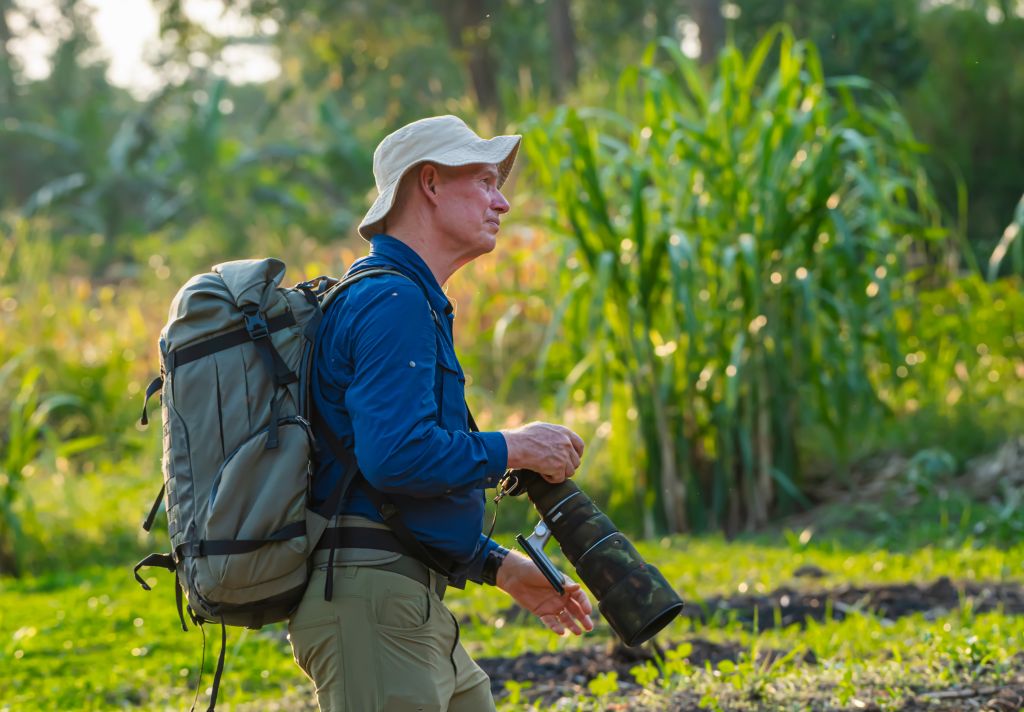
Uganda is one of Africa’s most rewarding destinations for wildlife photography safaris, yet it remains less crowded than many of the continent’s better-known safari destinations. From the misty wetlands of Mabamba Swamp and the chimpanzee forests of Kibale to the open savannah of Queen Elizabeth National Park, the ancient rainforest of Bwindi and the volcanic landscapes of southwestern Uganda, the country offers extraordinary variety for photographers.
A Uganda photo safari with a local guide gives photographers an opportunity to experience this diversity at a more personal pace. Instead of simply moving from one attraction to another, you can spend more time understanding animal behaviour, finding the best light, choosing productive locations and responding to changing weather and wildlife activity.
This is the philosophy behind Hillary Uganda Trips. Hillary is a local Ugandan wildlife photographer and safari guide who personally leads photography trips across the country. His firsthand knowledge of Uganda’s landscapes, wildlife and communities allows photographers to experience the country from a local perspective while learning practical wildlife photography techniques along the way.
This detailed guide explains what to expect from Uganda photography safaris, why travelling with a local photographer can make a difference, the best destinations for wildlife photography and a carefully designed 11-day Uganda photo safari itinerary from Entebbe to Kigali.
Why Choose Uganda for a Wildlife Photography Safari?
Uganda is often called the Pearl of Africa, and its nickname becomes particularly understandable when travelling through the country’s contrasting landscapes.
Within one itinerary, photographers can encounter the prehistoric-looking Shoebill in a papyrus wetland, chimpanzees moving through tropical forest, lions resting in savannah grassland, elephants gathering near water, mountain gorillas deep in rainforest and golden monkeys moving through bamboo-covered volcanic slopes.
This combination makes Uganda wildlife photography exceptionally diverse.
Unlike a safari focused exclusively on the Big Five, a Uganda photo safari can include primates, birds, large mammals, landscapes, cultures and dramatic scenery. The result is a photographic collection that tells a much broader story about Africa.
Uganda also offers opportunities for photographers who prefer quieter environments. Some locations can be explored away from the larger concentrations of vehicles found in heavily visited safari destinations.
For wildlife photographers, that means there are often opportunities to concentrate on composition and behaviour rather than simply trying to photograph an animal before another vehicle moves into position.
What Makes a Uganda Photo Safari Different?
A conventional Uganda safari is usually designed around seeing as much wildlife as possible. A photography safari in Uganda has a slightly different objective.
The goal is not only to see an animal but to photograph it well.
That means considering the direction of the light, the background, animal behaviour, vehicle positioning, shutter speed, autofocus, lens choice and the amount of time available at a sighting.
A local wildlife photographer can also help you recognise when an ordinary sighting may become an excellent photographic opportunity.
A lion lying in the grass may initially appear uninteresting. However, if it is positioned against a clean background with warm evening light, the same sighting can become a strong portrait. A chimpanzee sitting in dense foliage may be difficult to photograph, while another individual moving through an opening in the canopy may offer a much cleaner image.
These decisions are where local knowledge becomes especially valuable.
Uganda Photo Safaris with Hillary: A Local Photographer’s Perspective
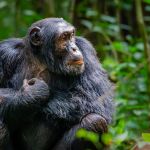
Hillary is a local wildlife photographer and guide who leads Uganda photo safaris throughout the Pearl of Africa. His connection with the country goes beyond guiding tourists. He has firsthand experience of the landscapes, wildlife and changing conditions that photographers encounter on safari.
During his trips, Hillary shares practical wildlife photography tricks for photographers, helping you understand how to work with Uganda’s natural light and unpredictable wildlife behaviour.
He can advise on positioning, composition, exposure, shutter speed, autofocus, lens selection and timing. More importantly, he encourages photographers to understand the subject before pressing the shutter.
This approach is particularly useful for travellers who want to improve their photography rather than simply collect snapshots.
Whether you are an experienced wildlife photographer with professional camera equipment or a traveller using a mirrorless camera, DSLR or advanced bridge camera, the safari can be adapted to your interests and experience.
The Best Destinations for Wildlife Photography in Uganda
Uganda has an unusually broad range of photographic environments. The itinerary below combines some of the country’s strongest destinations for wildlife, birds, primates, landscapes and cultural photography.
Mabamba Swamp: Shoebill Photography
For bird photographers, Mabamba Swamp is one of the most exciting locations on a Uganda photography safari.
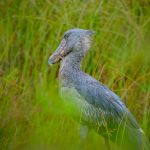
The wetland is famous for the Shoebill, one of Africa’s most distinctive birds. Its enormous bill, prehistoric appearance and slow, deliberate movements make it a highly sought-after photographic subject.
The Shoebill can be challenging to photograph because it may stand motionless among papyrus vegetation or suddenly take flight. This makes patience and anticipation important.
A local guide familiar with the wetland can help you search for the birds while minimising unnecessary disturbance.
The experience normally involves travelling by canoe through the papyrus channels. This provides a low perspective that can be excellent for bird photography.
Early morning light is particularly valuable because softer illumination can reveal feather detail while producing more attractive backgrounds.
Kibale National Park: Chimpanzee Photography
Kibale National Park is one of Africa’s most important destinations for chimpanzee trekking and primate photography.
The forest contains a remarkable diversity of primates, with chimpanzees being the main attraction for many visitors.
Photographing chimpanzees is very different from photographing large mammals on open savannah. The forest is often dark, backgrounds can be cluttered and animals may move quickly through vegetation.
This is where technical photography skills become important.
A relatively fast lens can help in low light. Increasing ISO may be necessary to maintain a sufficiently fast shutter speed, particularly when chimpanzees are climbing or moving through branches.
At the same time, photographers should avoid becoming so focused on camera settings that they forget to observe the animals.
Chimpanzee behaviour can change quickly. A good guide helps you anticipate movement and identify moments when an animal is likely to enter a clearer area.
Bigodi Wetland: Bird and Community Photography
Bigodi provides an important contrast to chimpanzee trekking.
The Bigodi Wetland Sanctuary experience combines nature walking, birdwatching and community tourism. It can be especially rewarding for photographers who want to photograph smaller wildlife and rural landscapes.
The wetland and surrounding vegetation support numerous bird species, while the community experience provides opportunities to learn about local livelihoods and culture.
This is a good place to slow down after chimpanzee trekking and concentrate on subjects that require observation rather than long-distance lenses.
Queen Elizabeth National Park: Classic African Wildlife Photography
Queen Elizabeth National Park is one of the highlights of a Uganda wildlife photography safari because of its combination of savannah, wetlands, forests, lakes and wildlife.
The park provides opportunities to photograph elephants, buffaloes, antelopes, hippos, lions, warthogs and many bird species.
The landscape itself is also highly photogenic.
Photographers can work with the open plains, distant hills, crater lakes and changing skies to create environmental wildlife images rather than only close-up portraits.
The Ishasha Tree-Climbing Lions and Savannah Photography
Depending on the route and itinerary, Ishasha can be considered for photographers particularly interested in lions and savannah landscapes.
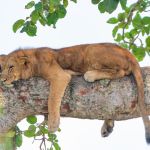
The famous tree-climbing lions of Ishasha have become one of Uganda’s most recognisable wildlife subjects.
However, wildlife sightings cannot be guaranteed. The behaviour of wild animals changes constantly, and photographers should approach the experience with flexibility.
The broader Queen Elizabeth ecosystem also provides opportunities to photograph lions, elephants, buffaloes, Uganda kob and other wildlife.
Kazinga Channel: Boat Photography
The Kazinga Channel boat cruise is one of the most productive wildlife photography experiences in Uganda.
The channel connects Lake Edward and Lake George and attracts large numbers of hippos, crocodiles, buffaloes, elephants and waterbirds.
A boat places photographers at water level, creating different perspectives from those available during a game drive.
Hippos are particularly interesting because they can be photographed partially submerged, yawning, interacting with one another or surrounded by reflections.
The channel is also productive for bird photographers. African fish eagles, kingfishers, herons, cormorants, storks and other water-associated species can be seen.
For photographers, the boat’s movement creates additional technical considerations. Fast shutter speeds can help compensate for both boat movement and animal movement, while image stabilisation can be useful with longer lenses.
Bwindi Impenetrable National Park: Gorilla Photography
For many photographers, the highlight of a Uganda photo safari is mountain gorilla trekking in Bwindi.
Bwindi Impenetrable National Park is home to mountain gorillas and provides one of the world’s most extraordinary wildlife encounters.
Photographing gorillas is not simply about getting close to a large animal. Their expressions, family relationships and human-like behaviour create opportunities for intimate storytelling.
However, the rainforest environment can be technically challenging.
The forest canopy can produce low and uneven light. Gorilla faces may be shaded while parts of their bodies are illuminated by sunlight filtering through leaves.
A photographer may therefore need to adjust exposure carefully and avoid overexposing bright patches of foliage.
A local wildlife photographer can help you anticipate moments such as silverbacks displaying dominance, infants interacting with adults, grooming, feeding and resting.
Rushaga Sector and Gorilla Trekking Photography
The Rushaga sector of Bwindi is the setting for the gorilla trek included in this itinerary.
Rushaga is particularly relevant for travellers interested in gorilla habituation experiences as well as standard gorilla trekking, although the exact experience and permit availability should always be confirmed before travel.
Gorilla trekking is physically demanding because the forest terrain is steep and conditions can be muddy.
Photographers should therefore keep equipment as lightweight as practical.
A camera body with a versatile telephoto or medium telephoto lens can often be more useful than carrying a large collection of lenses.
Batwa Cultural Photography
A Batwa cultural experience after gorilla trekking adds an important human dimension to the safari.
The Batwa have longstanding cultural connections with the forests of southwestern Uganda. A responsible cultural experience can introduce visitors to traditional knowledge, storytelling, music and other aspects of community heritage.
For photographers, cultural photography requires a different approach from wildlife photography.
Always ask permission before photographing people. Avoid treating cultural experiences as staged spectacles and instead concentrate on respectful storytelling.
A good photograph should preserve dignity as well as aesthetics.
Kisoro and the Virunga Volcanoes
The journey from Bwindi toward Kisoro introduces another dramatic landscape.
The Virunga volcanic region creates opportunities for landscape photography, particularly when clouds and mist interact with the volcanoes.
Kisoro also provides access to Mgahinga Gorilla National Park, where visitors can trek mountain gorillas, track golden monkeys and explore the volcanic highlands.
For photographers, this portion of the itinerary provides a welcome change from rainforest and savannah.
Lake Mulehe: Relaxation and Landscape Photography
Lake Mulehe is a quieter destination that can be included between Bwindi and Mgahinga.
Its peaceful waters, surrounding hills and rural scenery make it particularly suitable for landscape photography.
A canoeing experience can provide reflections of the surrounding hills while giving photographers a chance to slow down after gorilla trekking.
This part of the itinerary intentionally creates breathing space rather than filling every hour with activities.
That is important on a photography safari. Rest allows photographers to recharge physically and organise their equipment before the next major wildlife experience.
Mgahinga National Park: Golden Monkey Photography
The golden monkey is another highly photogenic primate found in southwestern Uganda.
Golden monkey trekking in Mgahinga Gorilla National Park takes visitors into the bamboo forests of the Virunga mountains.
Golden monkeys can be active and fast-moving, making them technically challenging subjects.
A fast shutter speed is useful when photographing animals jumping between branches. Continuous autofocus and burst shooting can also help when the action becomes unpredictable.
The golden monkeys’ bright coats can contrast beautifully with the green bamboo environment.
Unlike gorilla photography, where slower behavioural moments are common, golden monkey photography can require quick reactions.
Lake Bunyonyi: Landscape, Bird and Cultural Photography
Lake Bunyonyi is an ideal final photography destination because it combines several photographic genres.
The lake is surrounded by steep terraced hills and dotted with islands, creating dramatic compositions from both land and water.
Photographers can capture traditional canoes, birds, villages, cultivated terraces, mist and changing light.
Sunrise is particularly rewarding.
On some mornings, mist hangs over the water and gradually lifts as the sun rises. The islands then emerge through the haze, creating atmospheric layers.
Lake Bunyonyi is also an excellent place to photograph local life respectfully.
Detailed 11-Day Uganda Photo Safari Itinerary
The following itinerary is designed for photographers who want a balanced combination of Uganda wildlife photography, bird photography, primates, gorillas, golden monkeys, landscapes and cultural experiences.
It starts in Entebbe and ends in Kigali, making it particularly convenient for international travellers combining Uganda and Rwanda.
Day 1: Arrival in Entebbe and Overnight at 2Friends Beach Hotel
Your Uganda photo safari begins with arrival at Entebbe International Airport.
After immigration and baggage collection, Hillary or a representative will meet you and transfer you to your accommodation.
You will spend the night at 2Friends Beach Hotel, allowing you to recover from your international journey before beginning the active part of the safari.
Entebbe is located on the shores of Lake Victoria, and if your arrival time allows, there may be opportunities for relaxed photography around the lake.
Do not over-schedule the first day. International flights can be tiring, and the priority is to rest and prepare camera equipment for the following morning.
Photographers should use the evening to check batteries, memory cards, lenses and camera settings.
Day 2: Shoebill Tracking in Mabamba Swamp, Nkima Forest and Return to Entebbe
Day two begins early with a journey toward Mabamba Swamp, one of Uganda’s most famous Shoebill destinations.
The wetland is explored by canoe, providing access to papyrus channels where Shoebills may be encountered.
The main objective is Shoebill photography, but the wetland may also produce opportunities for photographing other bird species.
Patience is essential.
Rather than moving rapidly through the swamp, spend time scanning the papyrus edges and watching for movement.
After the Mabamba experience, continue to Nkima Forest for lunch and a nature experience.
The forest provides a different photographic environment from Mabamba, allowing you to explore woodland birds and landscapes.
Afterwards, return to Entebbe and overnight again at 2Friends Beach Hotel.
This second night near Entebbe avoids a long transfer immediately after an intensive birding day.
Day 3: Drive to Kibale and Afternoon Community Experience
After breakfast, begin the journey toward Kibale National Park.
The drive gradually changes from the Lake Victoria landscape toward western Uganda’s greener highlands.
The journey itself offers opportunities for rural and landscape photography, particularly when the weather is favourable.
Upon arrival in the Kibale area, check into Kibale Bweza Lodge.
The afternoon is dedicated to a community experience.
This provides an opportunity to photograph rural life, agriculture and the landscapes surrounding Kibale rather than immediately moving into the forest.
The community experience also helps photographers understand the human environment surrounding the national park.
Overnight at Kibale Bweza Lodge.
Day 4: Chimpanzee Trekking and Bigodi Wetland Walk
Day four is one of the major wildlife photography days.
After an early breakfast, head into Kibale Forest for chimpanzee trekking.
Chimpanzee photography requires patience because the animals may move through dense vegetation or high branches.
Hillary will help you understand how to position yourself and prepare your camera for changing light.
After the chimpanzee experience and lunch, continue to Bigodi Wetland for an afternoon nature and community walk.
The change from rainforest to wetland provides opportunities for bird photography and smaller wildlife.
The afternoon light can also be excellent for environmental photography.
Return to Kibale Bweza Lodge for the night.
Day 5: Transfer to Queen Elizabeth National Park and Evening Game Drive
After breakfast, depart Kibale for Queen Elizabeth National Park.
The transition from tropical forest to savannah creates new photographic opportunities.
Upon arrival, check into Buffalo Safari Lodge.
After settling in, prepare for an evening game drive.
Evening is one of the best times for wildlife photography because the light becomes warmer and softer.
Potential subjects include elephants, buffaloes, antelopes, warthogs, hippos and, depending on location and luck, lions.
The objective is not to rush between sightings.
Instead, use the evening light to create photographs with atmosphere, shadows and environmental context.
Return to Buffalo Safari Lodge for dinner and overnight.
Day 6: Morning Game Drive and Kazinga Channel Boat Cruise
Begin early with a morning game drive in Queen Elizabeth National Park.
Early morning is an important period for wildlife photography because animals are often more active and the light is softer.
This is a good time to practise different photographic approaches, including close portraits, environmental images and behavioural sequences.
Return for a break before the afternoon activity.
Later, head to the Kazinga Channel for the evening boat cruise.
The cruise provides an entirely different photographic perspective.
Hippos, crocodiles, buffaloes, elephants and waterbirds can be photographed from the water.
The changing evening light can produce reflections and silhouettes.
After the cruise, return to Buffalo Safari Lodge for the night.
Day 7: Transfer to Bwindi – Rushaga Sector
After breakfast, begin the journey toward Bwindi Impenetrable National Park, travelling toward the Rushaga sector.
This is a scenic transfer through southwestern Uganda.
The landscapes become increasingly mountainous, with cultivated hills and rural communities dominating the scenery.
For photographers, this is an opportunity to photograph Uganda’s highland landscapes and agricultural terraces.
Arrive in the Rushaga area and check into Four Gorillas Lodge.
Use the afternoon to rest and prepare your equipment for the following day’s gorilla trek.
Check your camera batteries, memory cards, rain protection and hiking equipment.
Overnight at Four Gorillas Lodge.
Day 8: Gorilla Trekking and Batwa Cultural Experience
This is likely to be one of the most memorable days of your Uganda wildlife photography safari.
After an early breakfast, proceed to the gorilla trekking briefing point.
The trek through Bwindi can be physically demanding. The forest is dense and the terrain can be steep.
Once you locate your assigned gorilla family, follow ranger instructions carefully.
Gorilla photography is about patience and observation.
Photograph facial expressions, family interactions, grooming, feeding and resting rather than concentrating exclusively on close-up portraits.
After the gorilla trek, return for lunch and later participate in a Batwa cultural experience.
This provides an opportunity to learn about Batwa heritage and traditional forest knowledge.
Photographers should approach the experience respectfully and request permission before photographing individuals.
Overnight again at Four Gorillas Lodge.
Day 9: Transfer to Kisoro, Relaxation and Optional Canoeing at Lake Mulehe
After breakfast, depart toward Kisoro.
The journey offers spectacular views of southwestern Uganda’s volcanic landscape.
Continue to Lake Mulehe, where you can relax after the previous day’s gorilla trek.
If conditions and time allow, take an optional canoe trip on Lake Mulehe.
The calm water and surrounding hills provide opportunities for landscape photography.
This is intentionally a slower day.
Photography safaris can become physically demanding when every day contains a long trek or game drive. A relaxed afternoon helps you recover before the next wildlife experience.
Overnight at Mulehe Safari Lodge.
Day 10: Golden Monkey Trekking and Transfer to Lake Bunyonyi
The morning begins with golden monkey trekking in Mgahinga Gorilla National Park.
The golden monkeys are active and often move quickly through bamboo vegetation.
Use a fast shutter speed when action increases, particularly when animals jump between branches.
After the trekking experience, continue toward Lake Bunyonyi.
Arrive at BirdNest Resort and check in.
The evening can be used for relaxation and, depending on the weather and light, photography around the lake.
Overnight at BirdNest Resort.
Day 11: Lake Bunyonyi Relaxation and Transfer to Kigali
The final morning is dedicated to Lake Bunyonyi.
Rather than rushing immediately toward the border, enjoy the lake and surrounding scenery.
A canoe excursion can provide opportunities for photographing islands, traditional boats, birds and terraced hills.
The quiet morning light can be particularly attractive for landscape photography.
After breakfast and your final Lake Bunyonyi experience, begin the transfer toward Kigali, Rwanda.
The exact border crossing and route can be selected according to your onward travel plans.
This marks the end of your Uganda photography safari.
Uganda Photo Safari Photography Tips
Choose the Right Camera Settings
Wildlife photography often requires rapid adjustments.
For moving animals, a shutter speed of around 1/1000 second or faster can be useful. For stationary subjects, slower speeds may be possible, especially when light is limited.
Aperture depends on the subject and desired depth of field. A wide aperture can separate an animal from the background, while a narrower aperture can keep more of a group sharp.
Auto ISO can be useful when light changes rapidly, but photographers should understand how their camera manages noise at higher ISO settings.
Use Fast Shutter Speeds for Primates
Chimpanzees and golden monkeys can move rapidly.
A fast shutter speed helps freeze movement, particularly when animals are climbing, jumping or swinging.
Continuous autofocus and burst shooting can increase your chances of capturing peak moments.
However, do not photograph everything in burst mode. Anticipating behaviour is more valuable than simply taking hundreds of frames.
Use the Light
The best wildlife photographs are rarely only about the animal.
Light determines mood, texture and depth.
Morning and late afternoon often provide softer light, while overcast conditions can be excellent for portraits because they reduce harsh shadows.
During a Uganda photo safari, learn to position yourself so the light works with the subject rather than against it.
Protect Your Camera From Rain
Uganda’s forests and highlands can experience sudden rainfall.
A waterproof camera cover, dry bag or rain sleeve is strongly recommended.
Keep spare batteries protected and carry a microfiber cloth for removing moisture from lenses.
In Bwindi, waterproofing becomes particularly important because rainforest conditions can change rapidly.
What Camera Equipment Should You Bring?
A practical Uganda wildlife photography safari kit might include a camera body, telephoto lens, wide-angle lens, spare batteries, memory cards, beanbag or support, waterproof protection and a comfortable camera bag.
A telephoto lens is useful for wildlife and birds, while a wide-angle lens is valuable for landscapes, gorilla environmental portraits and cultural experiences.
You do not necessarily need the most expensive equipment.
Good timing, light, composition and understanding animal behaviour often matter more than having the largest lens.
Hillary can help photographers make the best use of the equipment they already have rather than assuming that expensive equipment automatically produces better photographs.
Photography Ethics on a Uganda Safari
Wildlife photography should never compromise animal welfare.
Follow ranger and guide instructions during gorilla and chimpanzee experiences.
Do not attempt to approach animals independently or encourage unnatural behaviour for photographs.
Avoid using flash around gorillas and other wildlife unless specifically permitted.
When photographing communities, ask permission.
Responsible photography is about more than creating beautiful images. It is about ensuring that the process of creating those images respects wildlife and people.
Best Time for a Uganda Photo Safari
Uganda is a year-round wildlife destination, but different seasons offer different photographic opportunities.
The relatively drier periods are often convenient for trekking and road travel. However, Uganda’s rainy seasons can produce lush landscapes, dramatic skies and excellent atmospheric photography.
For bird photographers, seasonal movements can also influence the species encountered.
For gorilla trekking, remember that Bwindi is rainforest and rain can occur at any time.
Rather than choosing dates based only on the assumption that “dry season is best,” photographers should consider what they want to photograph.
If your priority is easy road travel, drier periods may be preferable.
If your priority is lush landscapes and dramatic skies, wetter periods can be highly rewarding.
How Much Does a Uganda Photo Safari Cost?
The cost of a Uganda photography safari varies depending on accommodation category, number of travellers, vehicle type, permits, activities and itinerary length.
Major costs can include accommodation, private safari vehicle, fuel, guide services, park entrance fees, gorilla permits, chimpanzee trekking permits, golden monkey permits, boat cruises and cultural experiences.
Gorilla trekking is one of the largest individual costs, while chimpanzee and golden monkey experiences add additional activity fees.
A private photography safari may cost more than a group safari because the vehicle and guide can be dedicated to your group.
However, photographers often find the additional flexibility worthwhile because it allows more control over stops, timing and photographic opportunities.
Hillary Uganda Trips can tailor the safari according to your budget, accommodation preferences and photographic objectives.
Why a Local Guide Makes a Difference
A local guide brings knowledge that cannot easily be learned from a general travel guide.
The best photographic location can change according to weather, animal movement, recent sightings and season.
A local guide can also help photographers understand cultural etiquette and communicate with communities.
Hillary’s role combines guiding with wildlife photography.
He does not simply drive between destinations. He shares firsthand information about Uganda’s wildlife, landscapes and communities while helping photographers improve their technique.
This is particularly valuable for photographers who want to return home with a coherent visual story rather than a random collection of animal photographs.
Uganda Photo Safaris for Beginners
You do not need to be a professional photographer to join a Uganda photo safari.
Beginners can learn basic techniques during the trip while enjoying Uganda’s wildlife.
Hillary can explain practical concepts such as shutter speed, aperture, ISO, autofocus and composition in the field, using real wildlife situations rather than abstract classroom examples.
This makes the learning process more intuitive.
By the end of the safari, photographers should have greater confidence in anticipating animal behaviour and adjusting their settings quickly.
Uganda Photo Safaris for Experienced Photographers
Experienced wildlife photographers can also benefit from a local photography-focused itinerary.
Advanced photographers may want to concentrate on specific subjects such as birds in flight, primate behaviour, low-light forest photography, gorilla portraits or environmental landscapes.
The itinerary can be adapted around these priorities.
For example, a bird photographer may want more time at Mabamba and Lake Bunyonyi, while a primate photographer may prioritise Kibale, Bwindi and Mgahinga.
A private itinerary provides greater flexibility than a standard sightseeing schedule.
Beyond Wildlife: Telling the Story of Uganda
The strongest Uganda safari photography collections usually contain more than animal portraits.
Include landscapes.
Photograph farmers working on terraced hills.
Capture traditional canoes moving across Lake Bunyonyi.
Photograph birds within their habitats rather than only filling the frame with feathers.
Document roads, forests, villages and changing landscapes.
These photographs provide context.
They tell viewers what Uganda feels like rather than simply showing them what animals look like.
This is one of the main advantages of travelling with a local photographer: Hillary can help you recognise photographic stories that a visitor travelling quickly might overlook.
Combining Uganda and Rwanda on One Photo Safari
The itinerary ending in Kigali is particularly convenient for international travellers.
Uganda and Rwanda can be combined into a single East African journey, allowing travellers to experience different landscapes and wildlife destinations without necessarily returning to their original arrival point.
Starting in Entebbe and finishing in Kigali also reduces unnecessary backtracking.
Travellers can continue their journey in Rwanda or fly home from Kigali International Airport depending on their international itinerary.
Border procedures, visa requirements and entry regulations can change, so these should always be checked before travel.
Who Is This Uganda Photo Safari Designed For?
This itinerary is suitable for wildlife photographers, bird photographers, nature lovers, couples, families with appropriate adjustments, amateur photographers and experienced professionals.
It is particularly suitable for travellers who want to combine:
Wildlife photography
Bird photography
Landscape photography
Lake photography
Uganda safari experiences
The itinerary can also be adjusted according to fitness level, photography interests and preferred accommodation.
Plan Your Uganda Photo Safari With Hillary
A Uganda photo safari with a local photographer offers something different from a conventional package safari.
You are not simply travelling through Uganda looking for animals.
You are learning how to observe.
You are learning how to use light.
You are learning when to wait.
You are learning how to position your camera.
And you are discovering the country through someone who knows its landscapes and wildlife personally.
Hillary, a local Ugandan wildlife photographer and safari guide, personally leads these trips and shares firsthand information about Uganda’s wildlife, landscapes and communities. His practical wildlife photography tricks are designed to help photographers make the most of every opportunity, whether you are photographing a Shoebill in Mabamba, chimpanzees in Kibale, lions in Queen Elizabeth, gorillas in Bwindi, golden monkeys in Mgahinga or landscapes around Lake Bunyonyi.
Ready to Plan Your Uganda Photography Safari?
Contact Hillary Uganda Trips to discuss your dates, photography interests, accommodation preferences and the type of wildlife you most want to photograph.
WhatsApp:+256726436969
Email: hillary@hillaryugandatrips.com
Your itinerary can be customised for professional photographers, first-time wildlife photographers, birders, couples or private groups.
Frequently Asked Questions About Uganda Photo Safaris
What is the best destination for wildlife photography in Uganda?
There is no single best destination because different parks offer different photographic subjects. Queen Elizabeth National Park is excellent for savannah wildlife, Kibale is outstanding for primates, Bwindi is famous for gorilla photography, Mabamba is a major Shoebill destination and Lake Bunyonyi is excellent for landscape and bird photography.
Is Uganda good for bird photography?
Yes. Uganda is one of Africa’s strongest birding destinations, with a wide variety of habitats and bird species. Mabamba Swamp, Kibale, Bwindi, Queen Elizabeth, Mgahinga and Lake Bunyonyi can all contribute to a bird photography itinerary.
Can beginners join a Uganda photography safari?
Absolutely. A photography safari can be adapted to your experience level. A local photographer such as Hillary can provide practical instruction on camera settings, composition, light and wildlife behaviour during the trip.
What lens should I bring on a Uganda photo safari?
A telephoto lens is essential for most wildlife photography. A versatile medium telephoto lens can also be valuable for gorillas and larger animals, while a wide-angle lens is useful for landscapes, cultural photography and environmental wildlife portraits.
Is gorilla photography included in Uganda photo safaris?
Yes. Gorilla trekking can be incorporated into a photography safari, subject to permit availability. Photography must follow the rules and instructions provided by Uganda’s wildlife authorities and trekking rangers.
How many days are ideal for a Uganda photography safari?
An itinerary of 10–14 days allows photographers to combine several major destinations without rushing. The 11-day itinerary described in this guide provides a strong combination of birds, chimpanzees, savannah wildlife, gorillas, golden monkeys and landscapes.
Can a Uganda photo safari end in Kigali?
Yes. A safari can begin in Entebbe and finish in Kigali, making it convenient for travellers who want to combine Uganda and Rwanda or fly home from Kigali.
Can Hillary customise the photography safari?
Yes. The itinerary can be adapted according to your preferred wildlife subjects, photography experience, accommodation level, travel dates and budget.
Final Thoughts: Experience Uganda Through a Photographer’s Lens
A Uganda photo safari is much more than a holiday with a camera.
It is an opportunity to experience the Pearl of Africa through wildlife, landscapes, people and light.
Few itineraries provide such a remarkable range of photographic experiences in a relatively short period. You can begin by photographing a prehistoric Shoebill in a papyrus wetland, move into the ancient forests of Kibale to photograph chimpanzees, explore Queen Elizabeth’s savannah and waterways, enter Bwindi’s rainforest in search of mountain gorillas, photograph golden monkeys among bamboo and finish among the islands and terraced hills of Lake Bunyonyi.
The diversity is what makes wildlife photography in Uganda so compelling.
But the greatest photographs do not always come from having the most expensive camera or the longest lens. They come from understanding the subject, being patient, recognising good light and knowing when to press the shutter.
That is why travelling with a local wildlife photographer can transform the experience.
Hillary personally leads Uganda photography safaris and shares firsthand knowledge of the places, wildlife and communities you encounter. His wildlife photography tricks help photographers improve their composition, camera technique, positioning and timing while experiencing Uganda at a more personal pace.
From Mabamba’s Shoebills to Kibale’s chimpanzees, Queen Elizabeth’s savannah wildlife, Bwindi’s mountain gorillas, Mgahinga’s golden monkeys and Lake Bunyonyi’s spectacular landscapes, every destination adds another chapter to your photographic story.
If you are looking for a Uganda wildlife photography safari, Uganda birding and photography tour, gorilla photography safari, Uganda photo safari with a local guide, or a private photography safari in Uganda, this itinerary provides an excellent foundation.
Your camera will record the photographs.
But the local knowledge, patience, stories and experiences will create the memories behind them.
Start planning your Uganda photo safari with Hillary Uganda Trips today.
WhatsApp:+256726436969
Email: hillary@hillaryugandatrips.com